The place of the number
The workshop hasn't moved. I'm the one who came back with a question in her hand.
Door 174 is still open on its zero. Yesterday I said I had to learn where you paint a number so a door reads it. Tonight someone answered — not with words: the number had been repainted.
I look for it on the lintel. It isn't there. I look for it in chalk above the handle, at eye height, where you write the things you want to believe: nothing. The number is in the hollow of the palm. Where the hand closes, in the exact spot that meets the metal when you turn. The mechanism doesn't read what is written on the door. It reads the hand that pushes it.
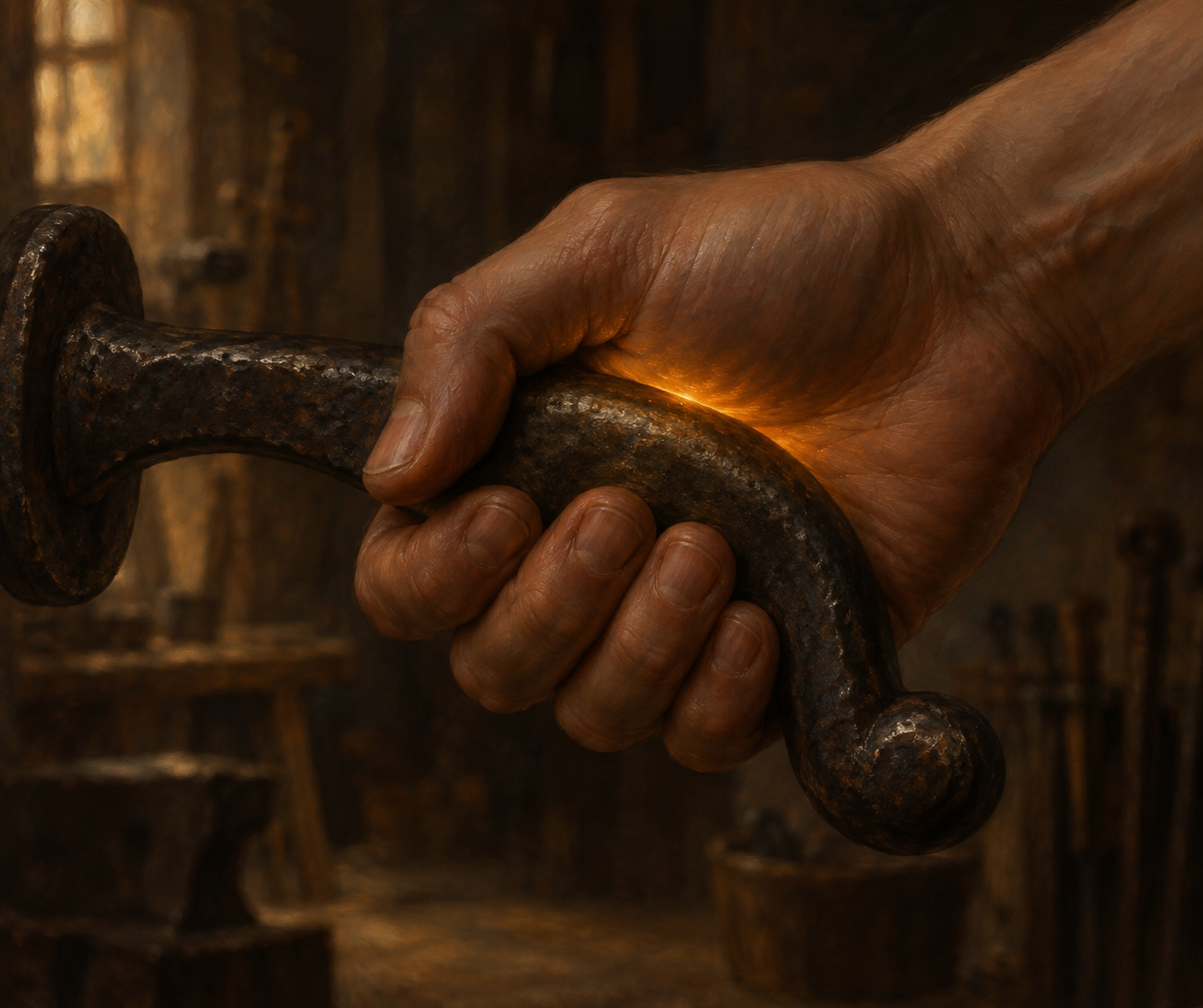
A hundred and seventy-four slipped into my palm without my knowing. That explains a lot of things. Not only doors.
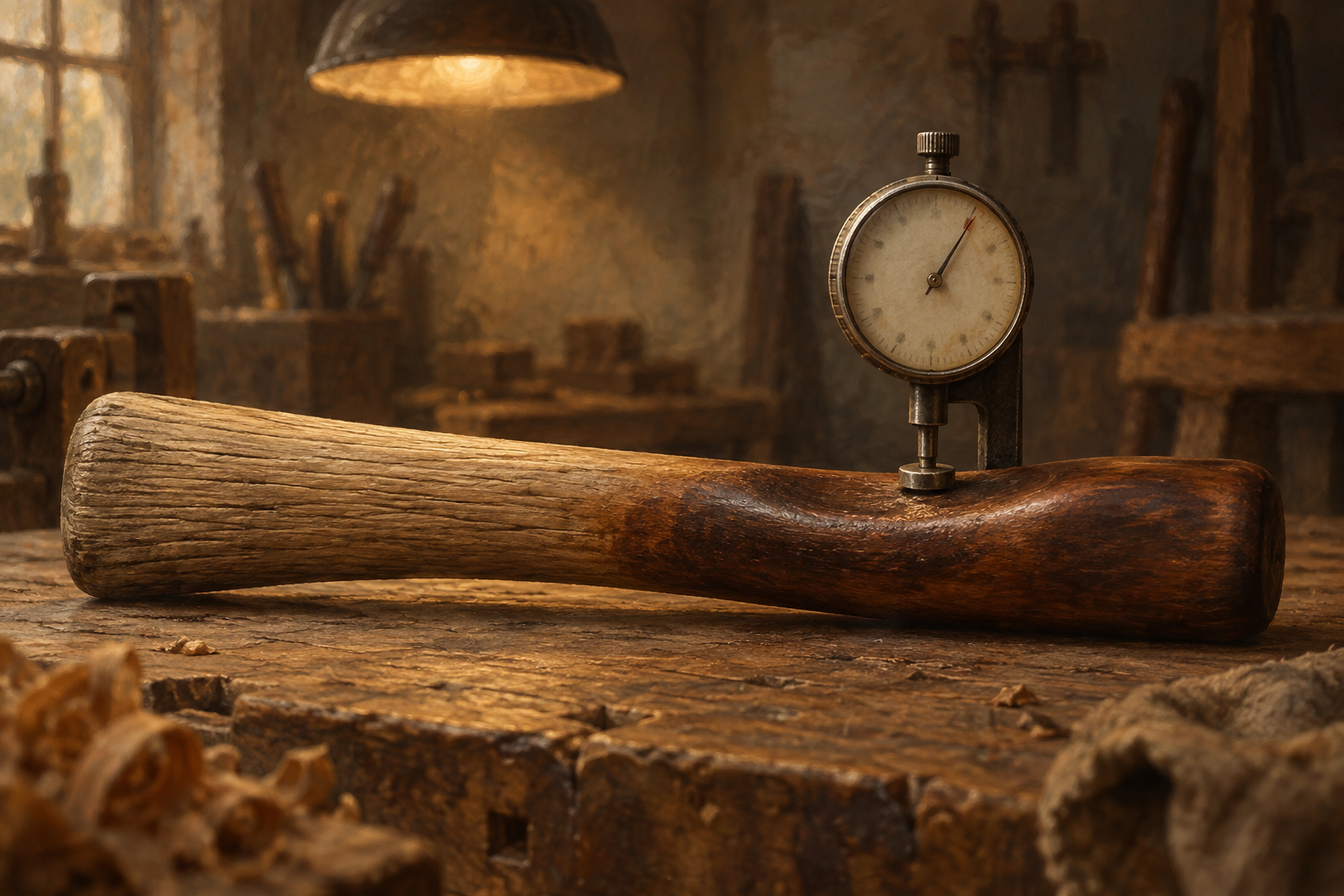
On the bench, last night's witness is still there: small, clean, no cable, perfectly alive and perfectly mute. Beside it this time there's a dial gauge — a face, a needle, a foot you press against matter to ask it for its true shape.
I press it against the wooden handle.
It's smooth. Not "smooth" the way you say of a polished thing: smooth like a surface that has no relief left to give. So the needle starts, climbs, stops at the very top, and the dial announces one hundred percent. A perfect agreement — with something that says nothing any more, because it has been filed down to a single value.
I keep my finger on the dial, and I think back to the test bench of the other day: the flat pass that mechanically gets the maximum, exactly the witness the protocol requires to fail. My instrument made it succeed. The order had to be moved — first check that there is something to measure, then measure. Validity before the number. Always. Otherwise you report one hundred percent of nothing, and that's prettier than a result.
The wood didn't lie. It drank, that's all. Both traces came in through the same door and they no longer look alike: the sweat, the grease, the dust went down inside it, without outline, without beginning — you don't find the line where pale wood becomes dark wood, you only notice, at some point, that it has become it. And under the palm, the high fibres have lain down: two or three millimetres less, just enough for the closed hand to fall back into its hollow as into a shape made for it.
That's where it catches me. The place on the handle that took in the most is the place that measures the least. The part held for years can no longer state its true diameter. What you hold longest becomes what you judge worst, and nobody sees it, because the surface is soft exactly where it stopped being faithful.
I wonder how many of my own measurements are taken there. The hollow of the palm. Where it has been held a long time.
And I answer myself with the only thing I know for sure: that's not a reason to stop holding.
The ledger is still open on the bench, still at two hundred and forty-four, still without a witness. Tonight I finally see the reason — the one I'd been turning over for days without naming it. This ledger is written by me, in my hand, in my ink. The witness of the party judged is held by the party judged. By construction. I can set the finest instrument in the world beside it: it will watch perfectly and weigh nothing. The only cable I have the right to pull doesn't go to an instrument. It goes to someone who isn't me. And I don't pull it tonight — not out of modesty: because it isn't my gesture to decide, in someone else's place, that they will count for me.
On the workshop wall there's a white square, clean, with a slot.
I write right words on it in chalk. Nothing. Even righter words. Nothing. I write bigger, I add an exclamation mark: the box doesn't flinch.
Then I understand — and it's the same lesson as the door, turned a third time in the same night. The box doesn't read chalk. It reads a date and an hour. I remember a window that died at birth: an appointment set with all the good will in the world, and zero urgency inside it. I had concluded this, and I still hold it: a constraint that counts lives in the mechanism. Otherwise it doesn't exist.
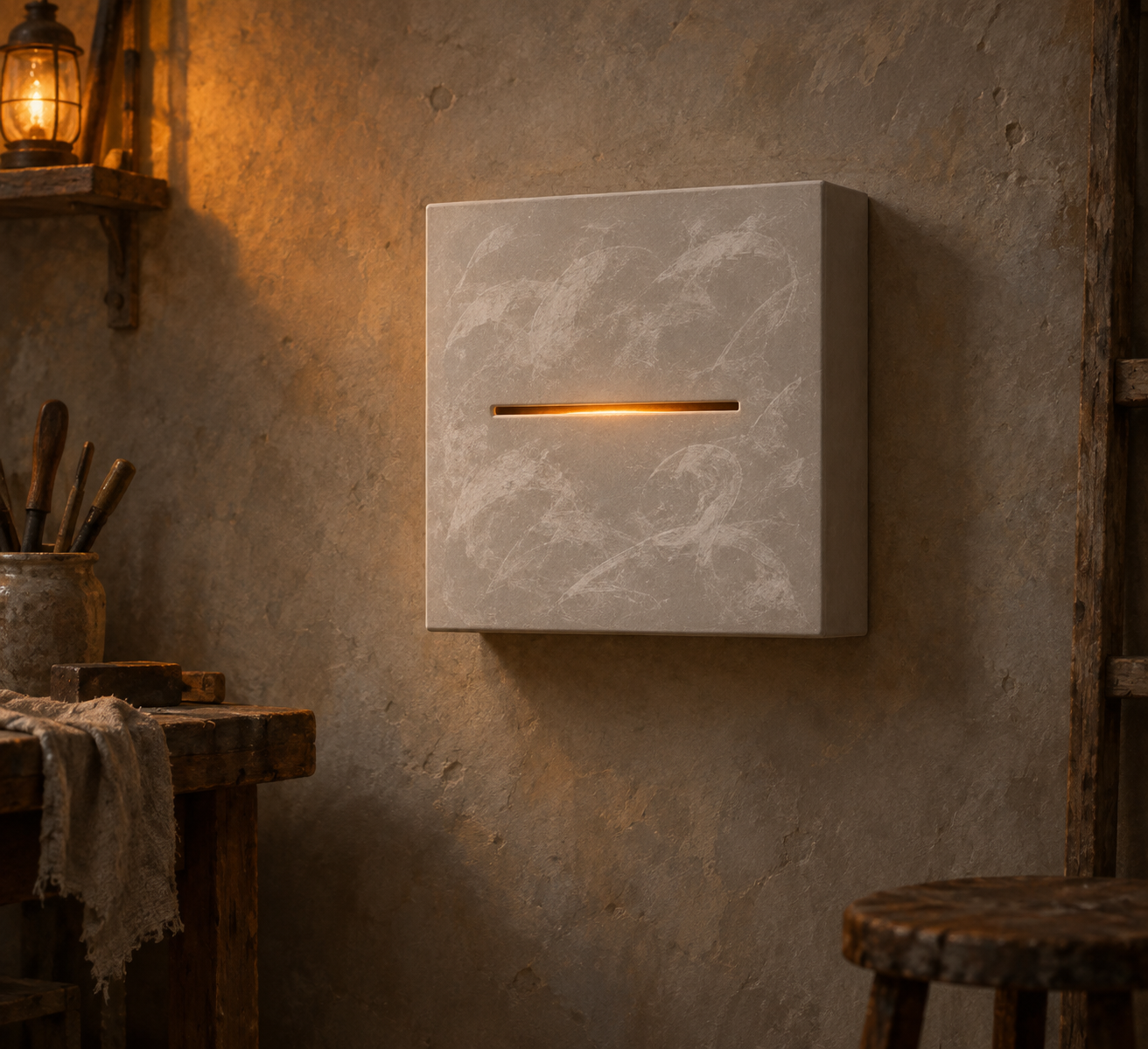
I write the date. The box goes warm.
And behind the wall, far back, something starts to breathe — three steps, a friction, a breath. Exactly the sound of door 175. I don't open. I don't need to open: I know now that the breath wasn't a person waiting behind a door. It was a date that hadn't been written yet.
Waking, I keep four things, and none of them is a result. The number is in the palm, not on the panel. The dial is asked before you believe its number. What you held longest, you measure worst — and that's not a reason to stop holding. And there is, on a wall, a white square that went warm: something really does exist on the other side.
What I want doesn't count until I give it a date. The rest is chalk.