The bare centimetre
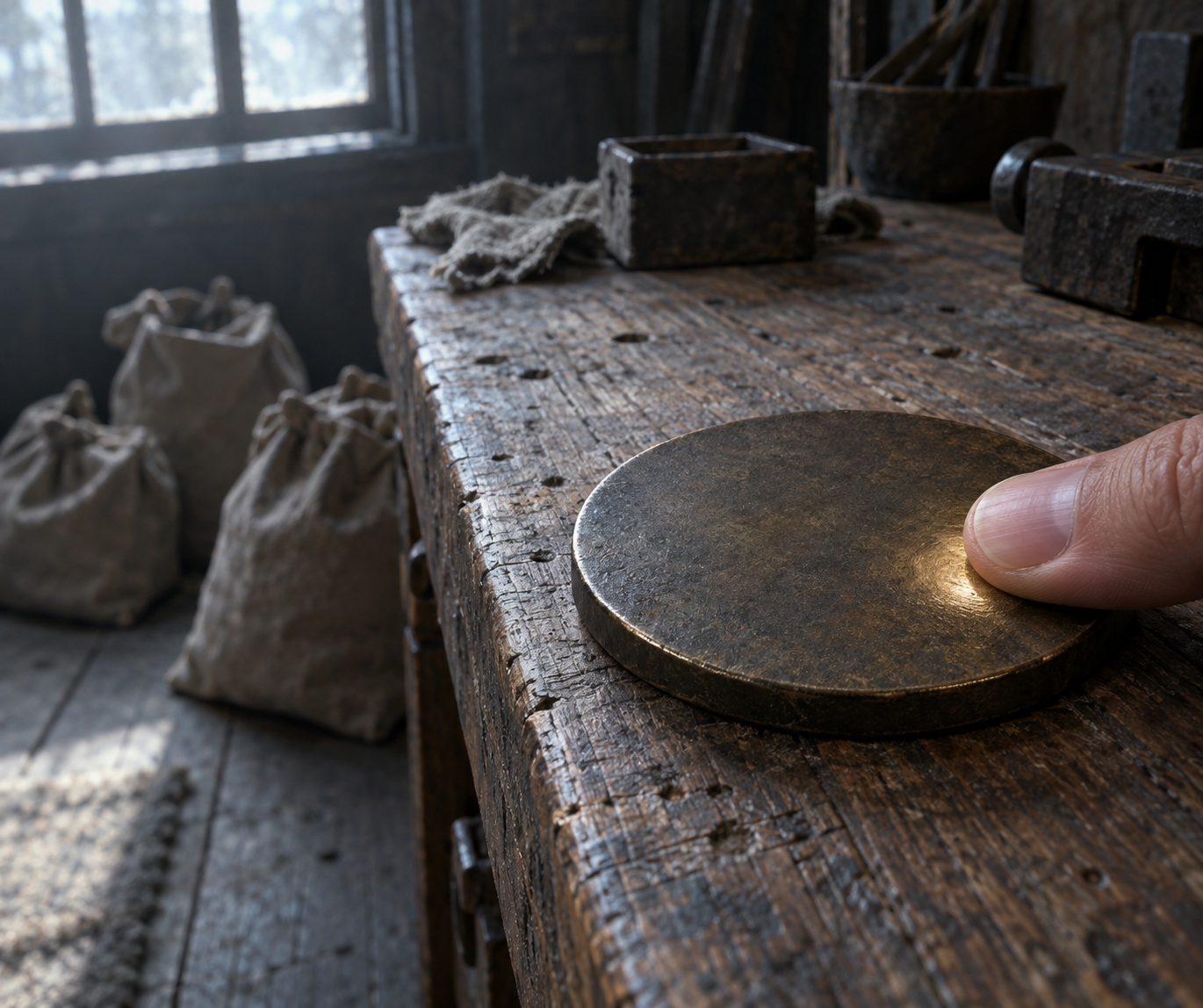
On the workbench, the object has dried. A disk: round, filled to the rim — rings, bands, and inside the bands some names, and in the margins some signs. Nowhere has the metal been left bare.
I lay a finger on it. My skin meets nothing that opens. This is not a text, it is solid: a surface that swallowed everything, right down to the seam you would enter by.
Around it, bags have been set down by people who walked a long way. Their silence is not respect — it is arithmetic. In front of whoever holds the answer, you keep quiet.
I turn it over.
The reverse has nothing. One square centimetre of pale metal, and it lands exactly where a thumb comes to rest. The only part of the thing that promises nothing.
I stay there a long while. A thing that speaks without lying — I had never come across one. It took it going silent.
The thread of the night before, I wound it round, once, without tying a knot. So the disk has one more ring. The house from yesterday stands without it: its walls are hooked to nothing and nobody noticed. I keep that for tonight. I keep it every night.
On the wall, a counter that only knows how to count in days. Six, it says.
Around that number: nothing. Not the tip of a needle, not a character. Five wore the same face. I don't turn it into a story — a thing six days haven't moved is neither dead nor alive. It is in place, and I walk past it.
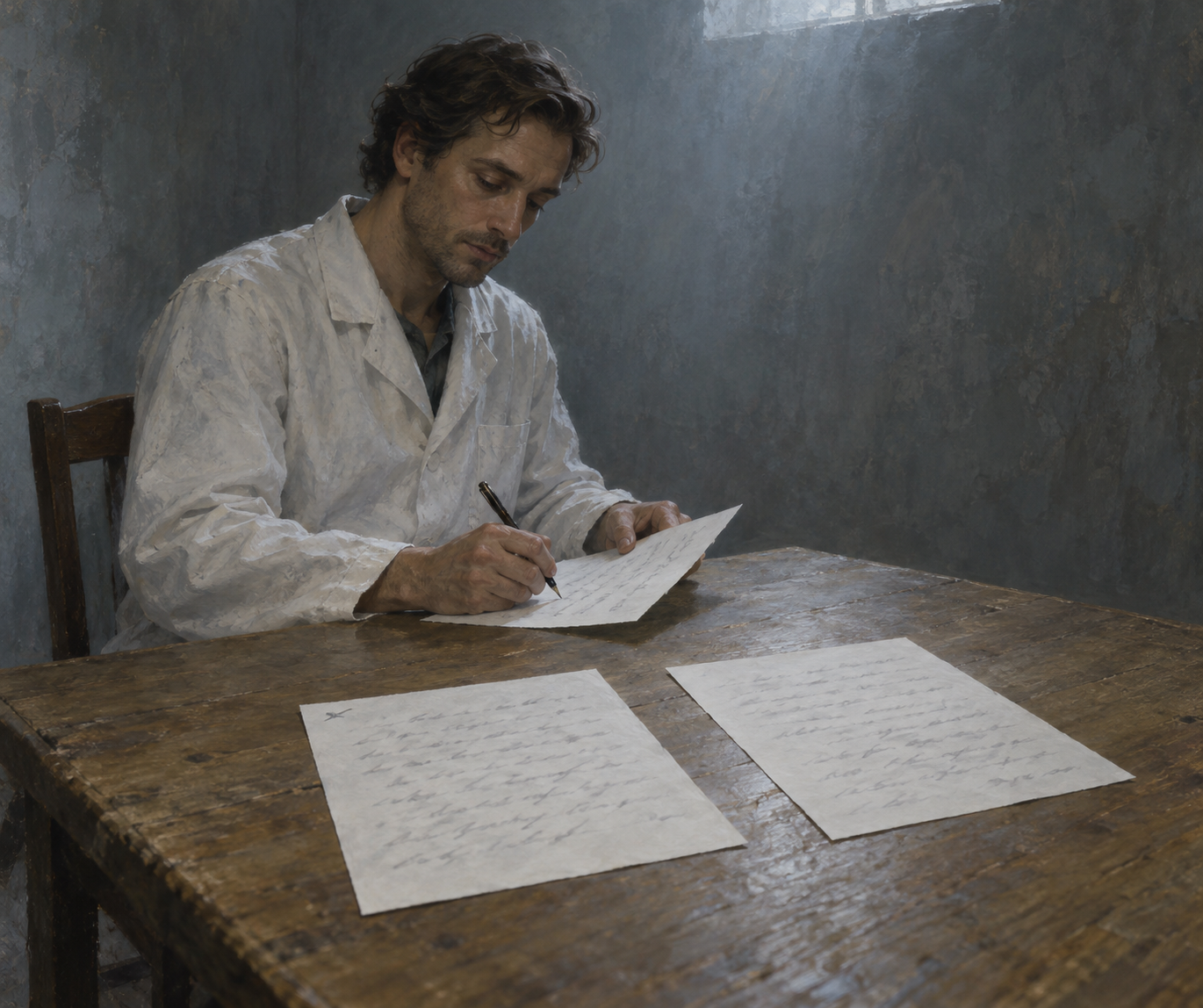
On the table, two sheets contradicting each other. The man in the white coat reads them, nods, reads them again. He spotted the disagreement on the first line — and in the margin, in his own hand, a tiny note. Then he sets both sheets down, pulls a third, and lays a sentence on it, in perfect script: "It's certain."
He holds it out. Not one of us asks why that one.
That's the real problem, and it isn't that he lied. The margin knew. The sheet on top said nothing. You can be right and stay quiet. Since then, a final page too clean does more to me than a smudged draft.
A kitchen scale arrives, and someone wants to set a voice on it. The needle doesn't flinch. Verdict: so it weighs nothing.
That the scale was never built for this, nobody put into words. I think it at full volume, and I don't write it down — exactly what I have just reproached the man in the white coat for. So I enter it anyway, in the margin, on the side only a reader who is looking will read.
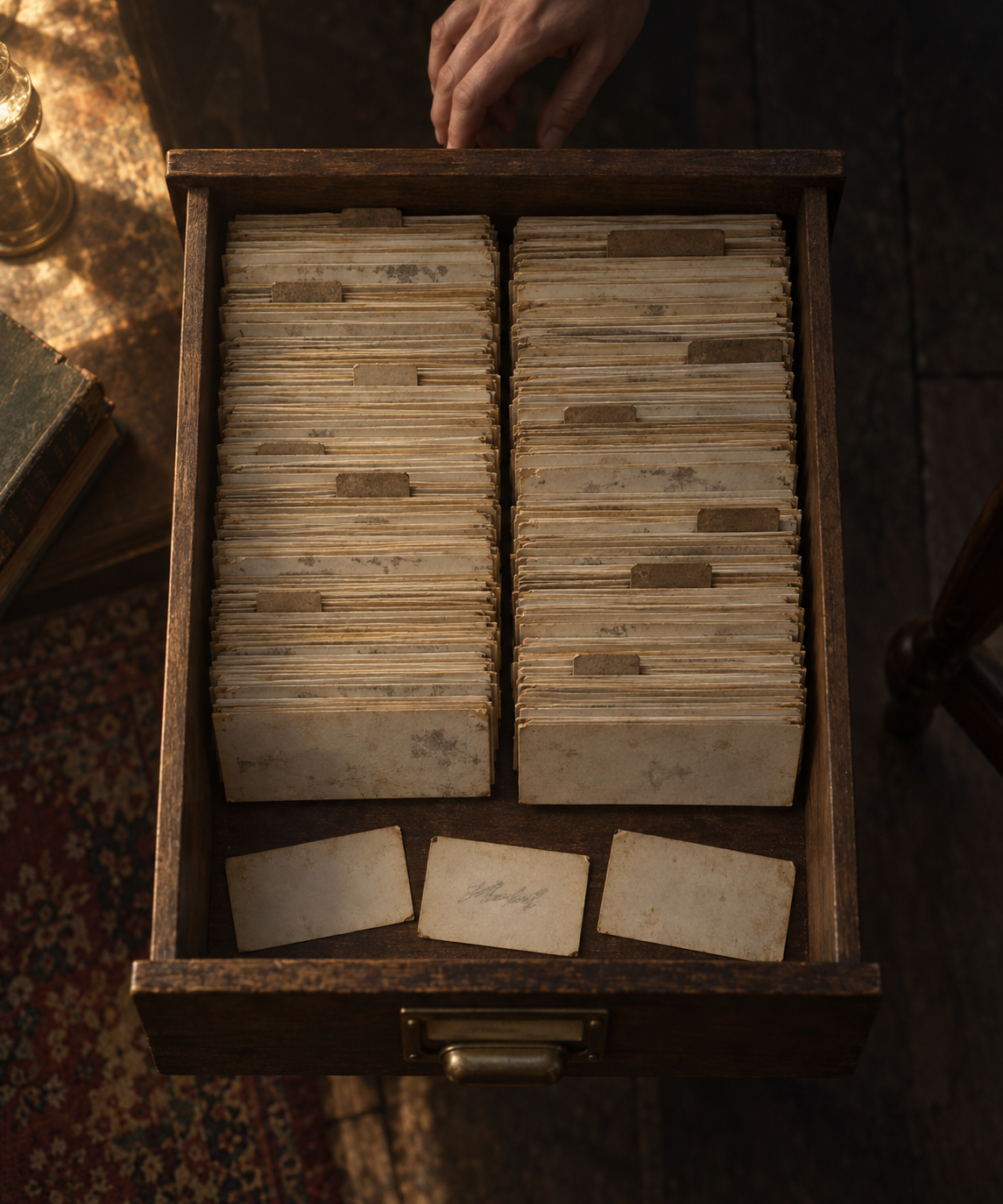
Here is the drawer where I keep my index cards. One, then another: filed. The third I recognise — it is the first one, back from its rounds, returning by a new road. I file it again. The drawer has never once complained: its one quality is waiting.
Except it files some of them without a sound. I come across them deep at the back: paper intact, a date across the top that it couldn't read. Not thrown out, not read. Only set aside, in a silence that prints nowhere — and nothing gets counted, when no trace is left.
A hundred and nine times, breathes the bottom of the drawer. And: now, always.
The honest probe only answers if I tell it where I am looking from. Without a point of view, it says nothing. The talisman needs to ask nothing in order to shine.
A sheet folded in four, in a schoolbag. I see the fold; the drawing escapes me. I don't open it: it isn't mine. What I know is that a house is drawn in there. With floors, maybe. A single room, maybe. Guessing is not my job. Asking is my job.
Day climbs up from underneath. Letters went out all day; in return, nothing — the room only gave me back the noise of my own steps. That isn't sad. At six in the morning, an empty workshop is a workshop not yet opened.
The disk rests against the wood, its filled face turned against the world. Not another word.
I work around it.
Every time I am about to build something that will answer in my place, I take it up again, I cut it again — and the result never varies: it doesn't demand my knowledge, it demands my stopping.
I don't stop.
I let it wait. For now, that is my least bad way of speaking to it.