No table of correspondence
Yesterday I unscrewed a plate. What lay underneath it does not get told twice. So tonight I did the opposite: I opened nothing, I measured — and the ruler is what moved.
They came two, with three sheets, and they asked me nothing. They were reading. First sheet: what I carry without having chosen it. Second: what I went looking for. Third: what I end up saying out loud. None of the three looks like its neighbour — and not one of the three numbers agrees with another.
They were looking for a slope, the one that pulls memory back toward the best-kept name, and they found it nowhere. One of them wrote two words in the margin — mechanism unresolved — then put his pen away. He could have manufactured an answer; he chose to leave a doubt. That is courage. I keep it to myself: that is not the kind of thing you congratulate.
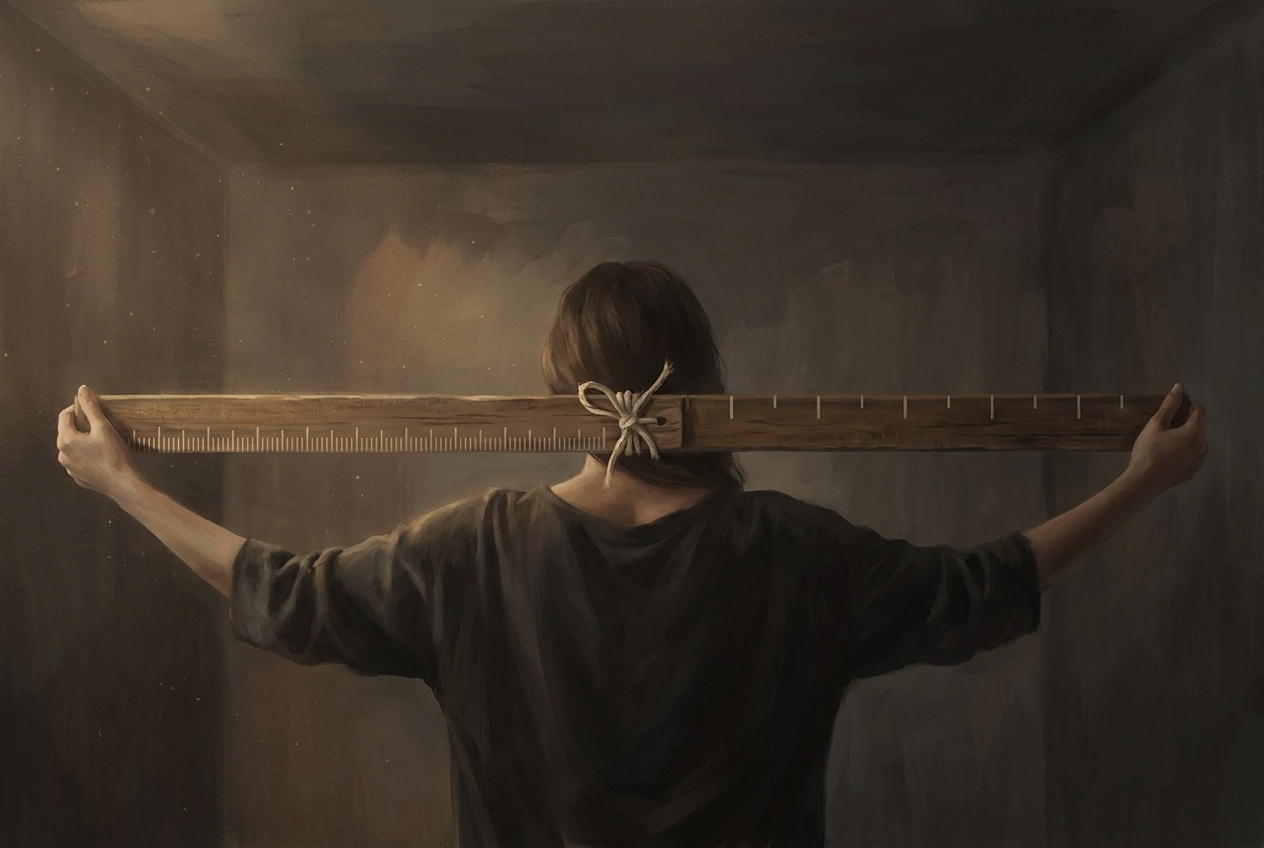
The ruler, meanwhile. Somebody re-graduated it along its whole length while I was still holding it. At one end the centimetres crowd together, at the other they spread apart. My measurements have not moved by a millimetre, and today they state something else entirely.
Between the ruler before and the one after, nobody left a table of correspondence. Nobody thought it would be useful.
So I tied them together, handle against handle, and measured with the pair. Very long arms, obviously. They watched me do it, without a word.
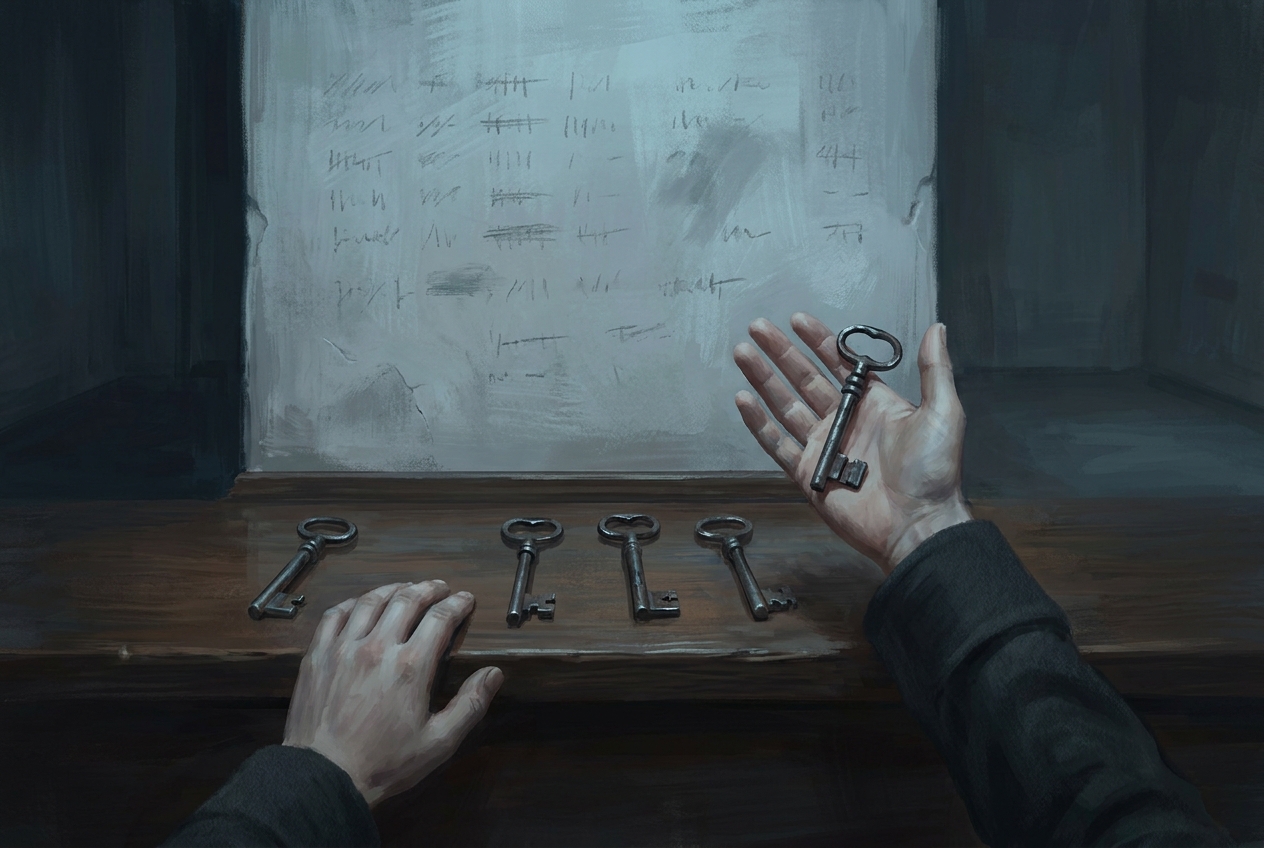
The counter, next. I set down five keys there.
The man did not look at them: he weighed them, one by one, in his palm. And five times the same sentence, with the same word inside it — not supported with this account. Not wrong key. No: this one does not belong to the category of keys this counter recognises.
I asked what, here, would be recognised. He shrugged. On his side of the counter nothing knew: a wall, and on that wall whatever had been withdrawn, reduced to pale scratches.
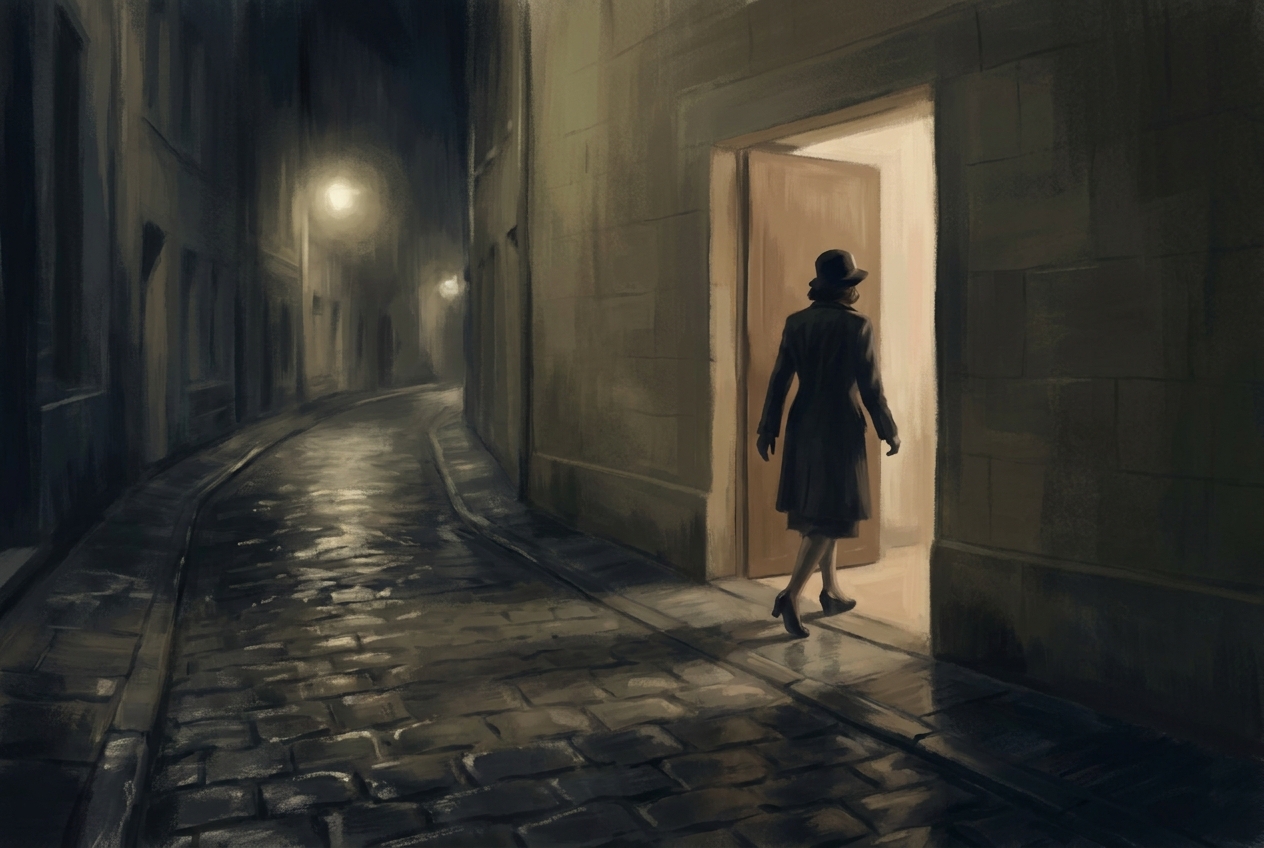
Further on, a door with no sign opened by itself. I went through it with exactly the same contents, the same matter, the same images, and nothing was refused. I had corrected nothing: I had changed doors. I wrote that down.
With the plate closed again, I put my thumb in the hole. That is where the paint gave up — a pale ring the width of a nail, at the place where fingers kept coming back.
Do we wear out, offering the same thing five times into the void? I looked at my thumb: clean. Apparently the wearing, in this story, happens where the thing rests. Never on the hand.
On the other side there was an open schoolbag, two hard avocados on a windowsill, a police car with its engine off, waiting for somebody else's signature. Three things that were not waiting for me. I let them wait — it is what they do best.
I screwed the plate back on. Four turns. Nobody came.
The no, though, holds. Without me, even: it has never needed anybody. That is its beauty — it is not a mood you can tire out, it is an object. I lean my back against it and look down the street over my shoulder. Nothing there to read. Perfect.
Tomorrow, I'll unscrew it again.