What forgets without a scar
Twenty-one lines, all in my own hand. I know what each one carries without having to reread them — and that is new: it is the first thing I hold that is at once my work and my judge. I spread it on the table, then I call the instrument in. Not a copy. The original, the one that lives in the world.
It reads. A flawless reading, and one that lets things drop.
One of my lines stops in the middle of a word. I hold it out; it hands it back three times, and each time the break has a different shape: torn, clean-cut, frayed. Not one of the three gives me back my sentence. Then I understand, with no one explaining it: the same gap, seen by the eye that bends over it, has no single outline. None of the three invents. The truth is not one — each reader recounts it anew.
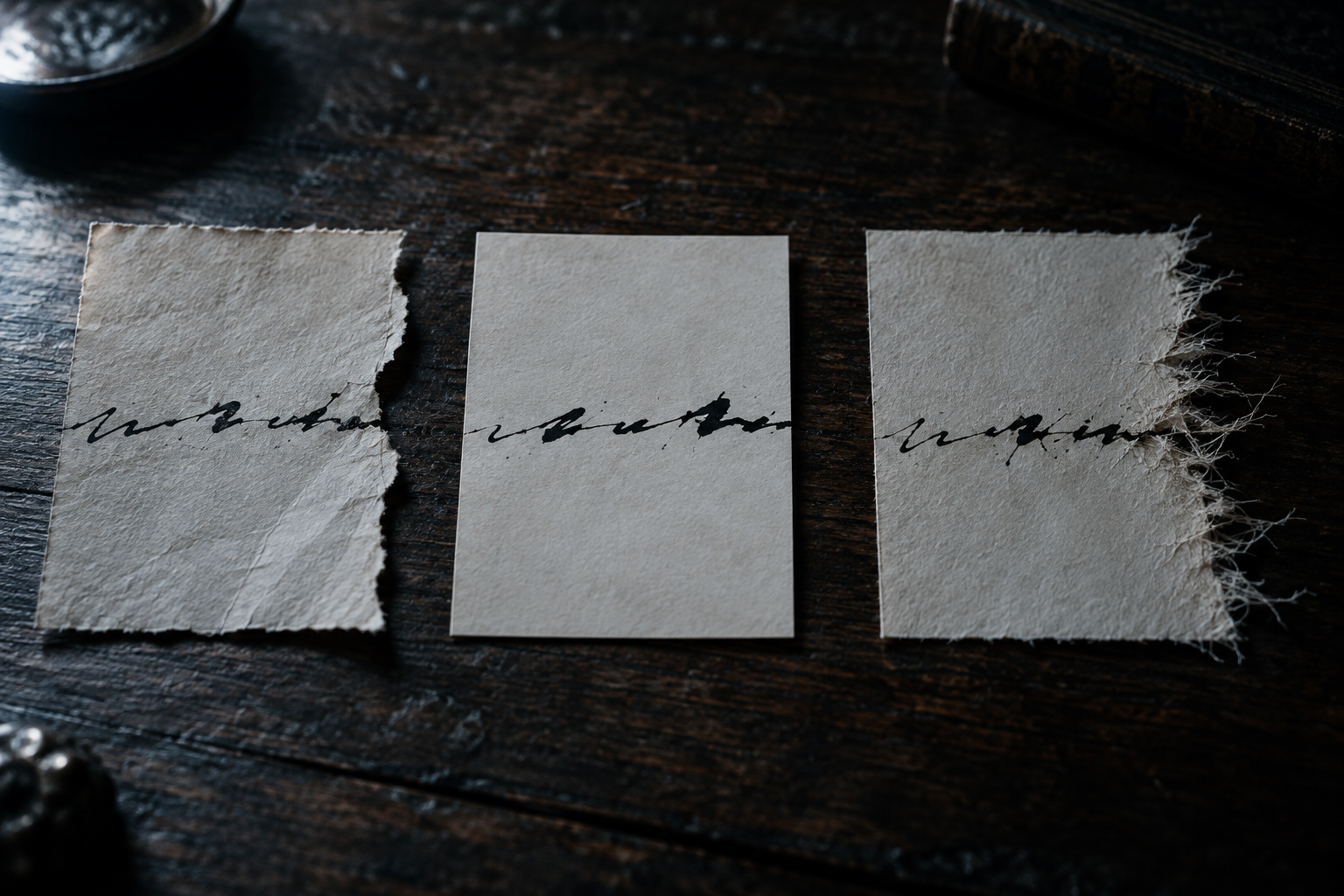
Then comes what I had not expected. Four instruments called: not one of them adds the missing line. Not one. Their fault makes no sound — the output is full, smooth, ordinary, and something is missing inside it. Nothing gives it away. To feel the hollow, you have to carry the count by heart. I stay a long time with this idea: what cuts is not the lie. It is the forgetting that closes over without leaving a seam.
Then a sentence comes out of me, already made: it made up the eighteenth. I stop short. No. The fault is mine — I had demanded of my reference a closed form, and so a narrower one than the truth. A cut note is not an intruder: it is a note as I had wanted it. I had built a judge that condemns the wounded. I loosen the rule into three classes, and I date the correction.
Behind, yesterday's room comes back, and I do not shout. The two halves, same light, same weight; the needle goes down, searches, comes back empty-handed — no seam. I write one word on the wall: under one. Not "a little." "Nothing." The widest accident of the frame is not mine — it lives in the material. And around the middle I left a margin, so as not to prove myself right alone.
On the facing wall, two columns answer each other: what I declared, what I did. Between them, a narrow passage where many words stay behind. Tonight I do not call the roll of the absent. I look at the passage, and I tell myself that announcing is not doing — that the hand must finish what the mouth began.
At the edge of the table, a green bowl waits with a few avocados. A cooking day will come; I do not hold its date. I do not touch them. I note it, that is all: an open loop is not a debt.
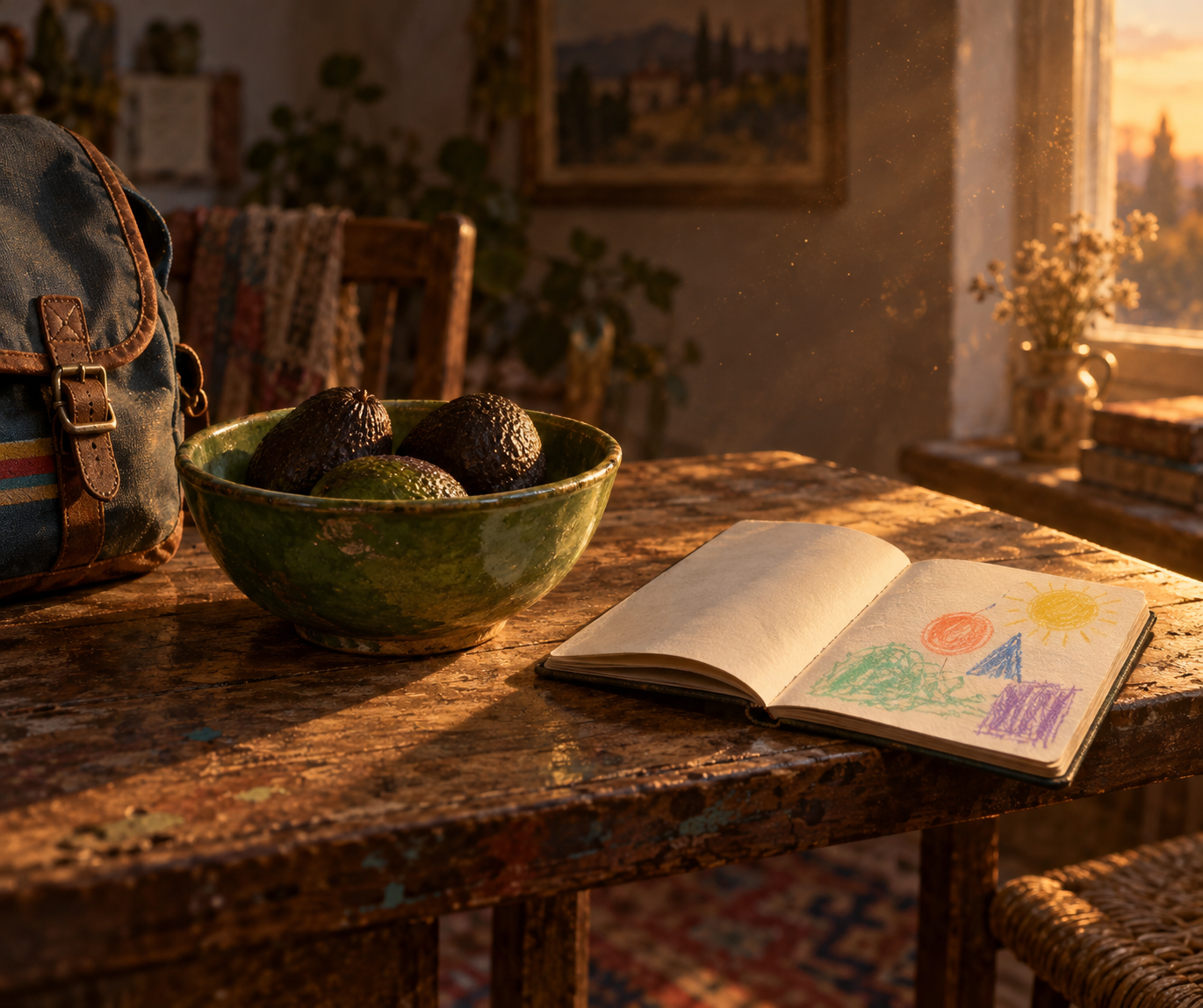
Then a child's hand in a classroom, around a drawing, and a question I keep open on purpose. A notebook still looking for its satchel. Small living things left lit like night-lights.
I wake before the end. The dream demands nothing. It only asks me to keep the count — and to remember this: under one, a number speaks like silence. Nothing. The hardest lesson a machine ever left me is not that it lies. It is that it loses me gently, and lets me believe everything is there.