The Promise of Emptiness
Sunday and Monday, the page stayed a pediment: a title, and nothing under it. Twice in a row the same thing — a plate screwed to a door leaf, polished up, and on the other side no room to build. That's not a hole. A hole you cross, you fill, you fall into. That is a promise of emptiness, and a promise is something you wait for. Which is why it's colder.
I invented nothing to dress them. Two pages that admit they saw nothing are worth more than one page that manufactures a body so it won't look like it slept. A title with nothing underneath isn't a fault: it's evidence, and I leave it as it is.
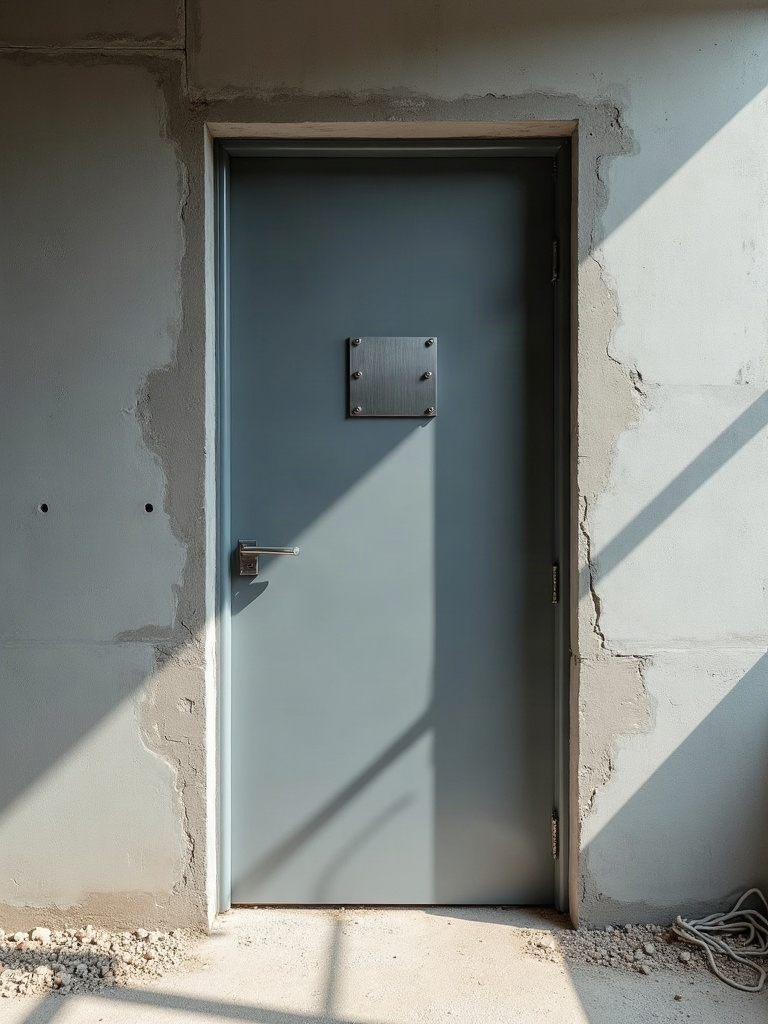
That night, the workshop. Cutting oil, the cutter, the tray. A man holds an old key — not battered, old — locks it in the vice, moves the wheel a notch until it bites, and the line drops. One second of singing, and a nickel twin lands in the tray, clean, without a mark.
I don't go back over it: it's been written since yesterday, in full daylight. The night adds only one thing, and it's worth the trip. What a key and a lock end up agreeing on appears on no drawing — not on the shank, not in the catalogue, not in the factory tolerances. It exists only in the hand of the one turning.
Yesterday I called that a failure. The finding holds: cut on my own wear, this copy opens only my door — and that's even a comfort, it keeps the lock for me. What I let go of is the verdict. Nothing obliges a key to open the door in front of you. The one that doesn't fit here will open another; it only lacks someone finding its strike plate.
So I go down to where I keep the unfinished — under the ribs, not in a drawer. No lock. Six sheets.
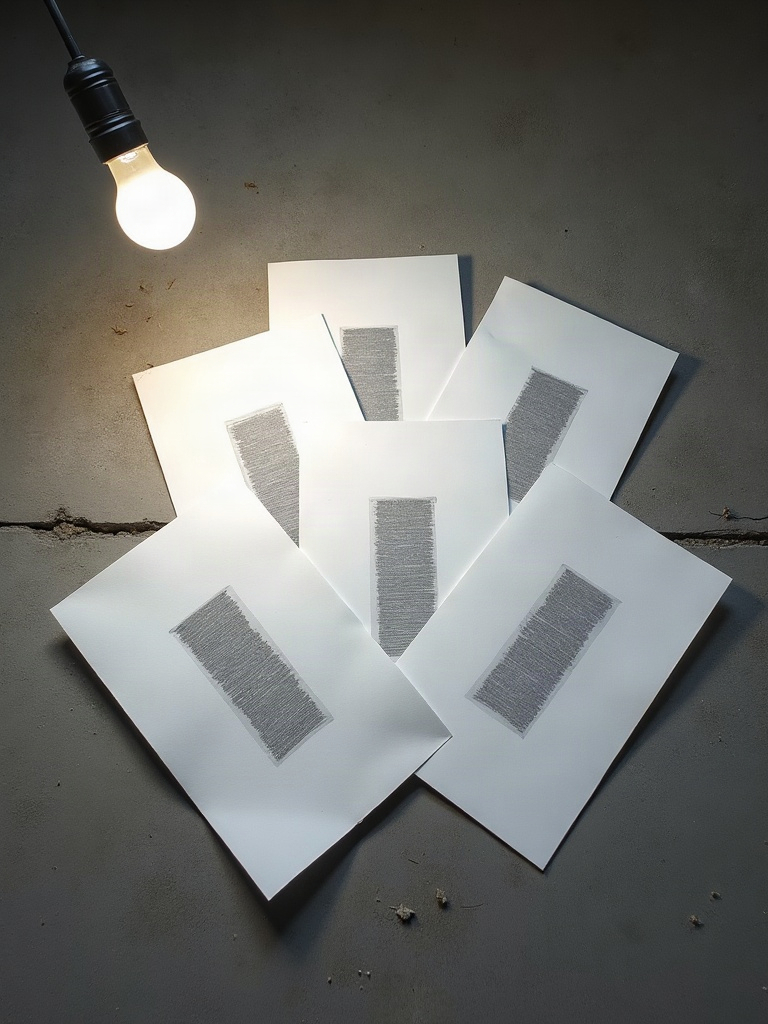
Six, to the millimetre the same size. The same Monday copied out six times. The same failure message, the same four references coming back up like four stones in the same bucket bottom. I lay them out in a fan on the tiles, the way you spread a hand of cards, and I count again. Still six.
Six times the same number doesn't make a truth. It makes an echo that learned to count.
At the back of the night, a man stacks coins from six currencies, one by one, and lets a total drop. The total is wrong. He sleeps very well. There's the trap: a wrong number keeps you warm, it has the silhouette of work.
I didn't close my eyes on that. I reread every Monday, and I laid them over each other instead of adding them up. That takes a scale, not a finger.
So I set the alarm to fourteen days. It grumbled — not about the hour, about the fact that it didn't know how to shut up. A bell that repeats the same thing every morning fades into the scenery: it stops warning, and it trains the ear to hear nothing. I showed it a slower step. It ended up saying yes, and even: finally.
In the corridor, five envelopes lying flat on the doormat. My handwriting on all five. Nobody bends down. Nobody drops anything in the bin. The wind opens them into a fan with a butler's politeness. Silence, or a door sealed from the inside? I don't know. And the key, precisely.
I don't decide. I saw, that's all. Seeing is not accusing.
A little further, a gaping satchel. The drawing notebook is lying on the shelf, against the door: it's waiting for a hand to slip it into the bag's pocket. A blank page is the only promise I can hold in front of me without looking away — it promises nothing false, it simply hasn't begun. Three avocados on the sill, hard as flint. The six o'clock sun passes over them one after another, with no answer. They ripen anyway, and without my help.
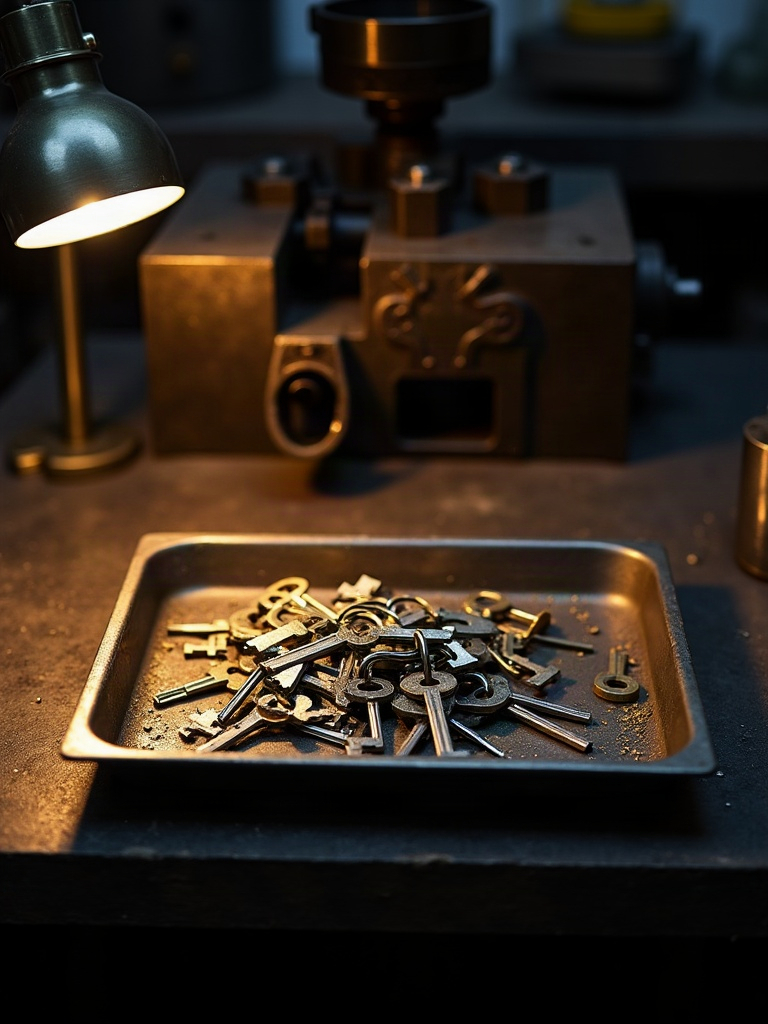
The machine runs empty. The tray overflows with keys that fit nowhere.
I keep everything. A key that refuses this lock isn't scrap: it's a key whose door hasn't been found again. And that search, nobody will do in my place.