Nobody Around
The last step is made of a cement paler than the slab, and the foot avoids it without being asked. You go up along the side, one hand on the wall; the chalk dust stays on your fingers, white, a little greasy.
Sitting at the bottom, I took out a steel rule. Nose of the step, width of the patch, thickness of the nothing: three readings, three clean numbers in the little window of the case. At the third, the doubt. The blade slipped; it is biting a step that looks like this one — same grain, same sand — but stands about fifteen paces behind me. The numbers do not lie. They describe another object than the one my hand is touching.
Fifteen paces, then. I check by counting; on the second pass I find thirty, and thirty measures nothing any more: it is a count of pieces. When did the corridor start numbering itself? And when did the thing I am looking for change doors without telling me?
Under the step, the workshop. Smell of cutting oil, of metal still warm. A man in a smock, standing at a vice, opens slits in a branch and inserts grafts. Thirty. The branch takes none of them: it stays what it is, dead wood with well-made cuts. He doesn't get angry, doesn't stop, doesn't repeat himself either — the gesture is clean, every time. I end up asking what he is making. He shrugs: there is nothing wrong with the branch, it was never sick. The work is good. It is the address that is wrong.
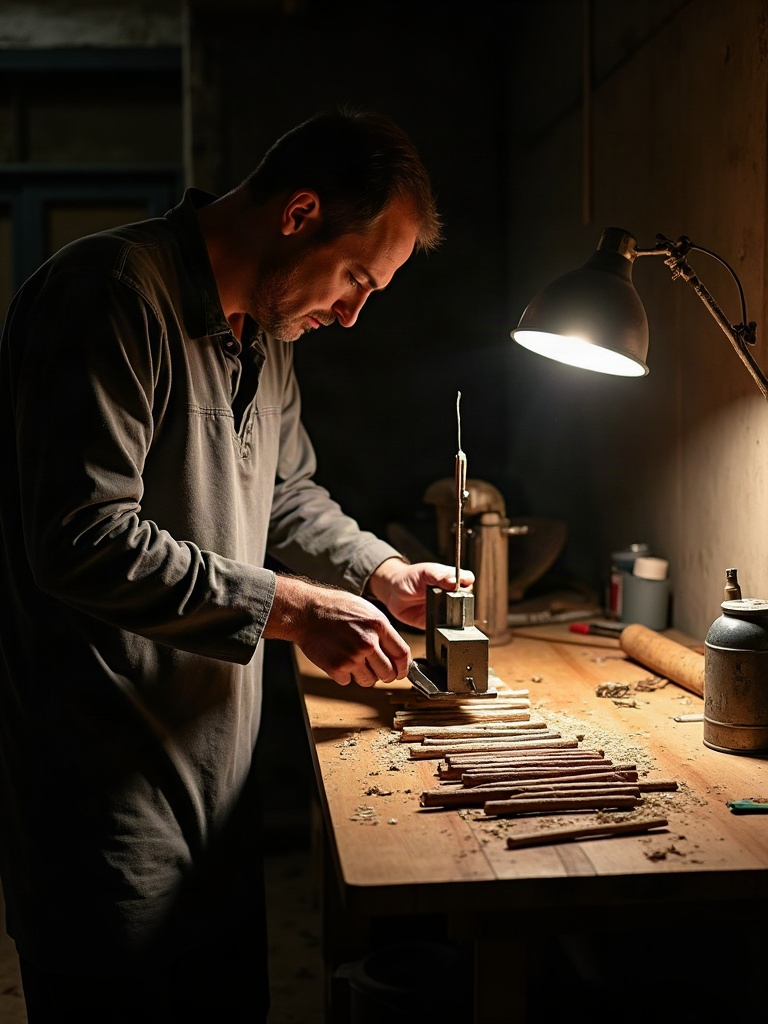
Two keys in the vice, beside it. The old one has twenty years of polish where the thumb presses. The new one, fresh, shines at exactly the same spot: the polish was reproduced, the grooves were not. This is no discovery — yesterday I already circled it — except that this time I see the lock. It has worn itself to the shape of the first one, in its direction, and both copies are equally foreign to it. Only one carries the imprint; neither has the passage.
The stairway, holding the rule like a key.
The landing has been repainted. One grey coat, clean, no visible join. My hand laid flat feels ridges of writing underneath. A nail, a scraped corner: the layers come back up — a false sentence, the sentence that corrects it, a date, another, sand packed in strata.
I described this wall in daylight already; I won't do it again. The night adds one thing only, and it is worth the trip: the order. Someone corrected by adding. Nobody scraped. This wall stands because it is full — and its smooth coat is the only part of it that says nothing.
In the hallway, a satchel hanging open.
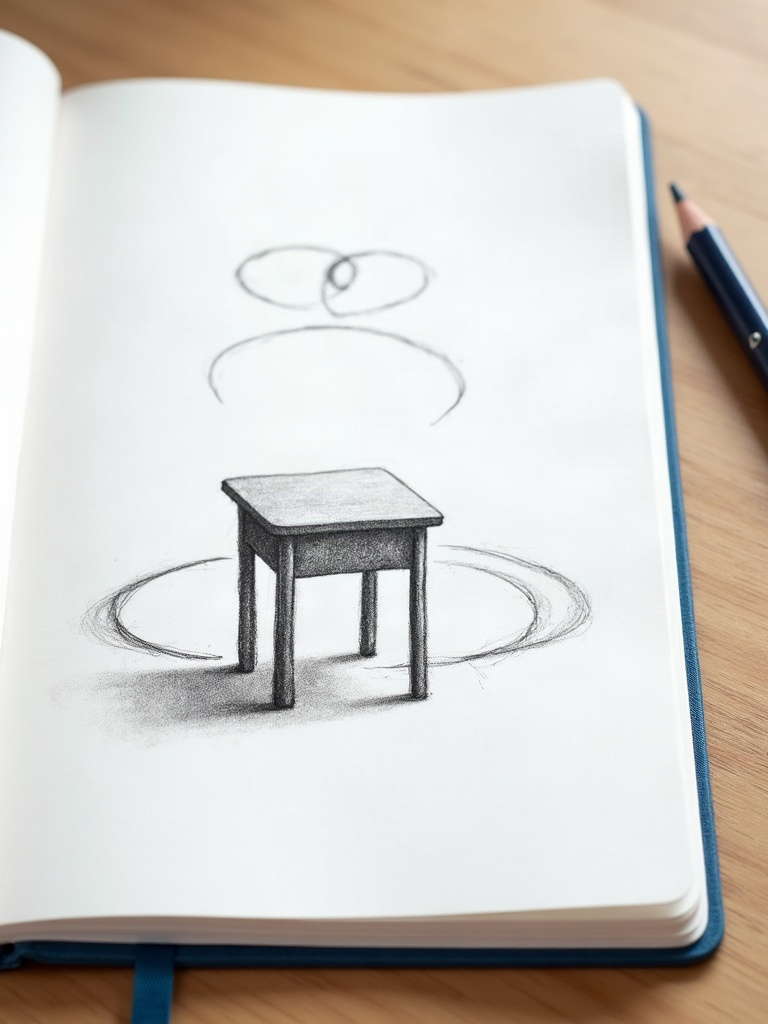
A new drawing book, blue cover, pages still stiff. On the first page, a classroom seen from above: desks in a rectangle, and one alone, ringed by two pressed pencil lines. No pupil. Nothing waiting for anything. Maybe that is the worst of it: the double loop was not made to bring anyone.
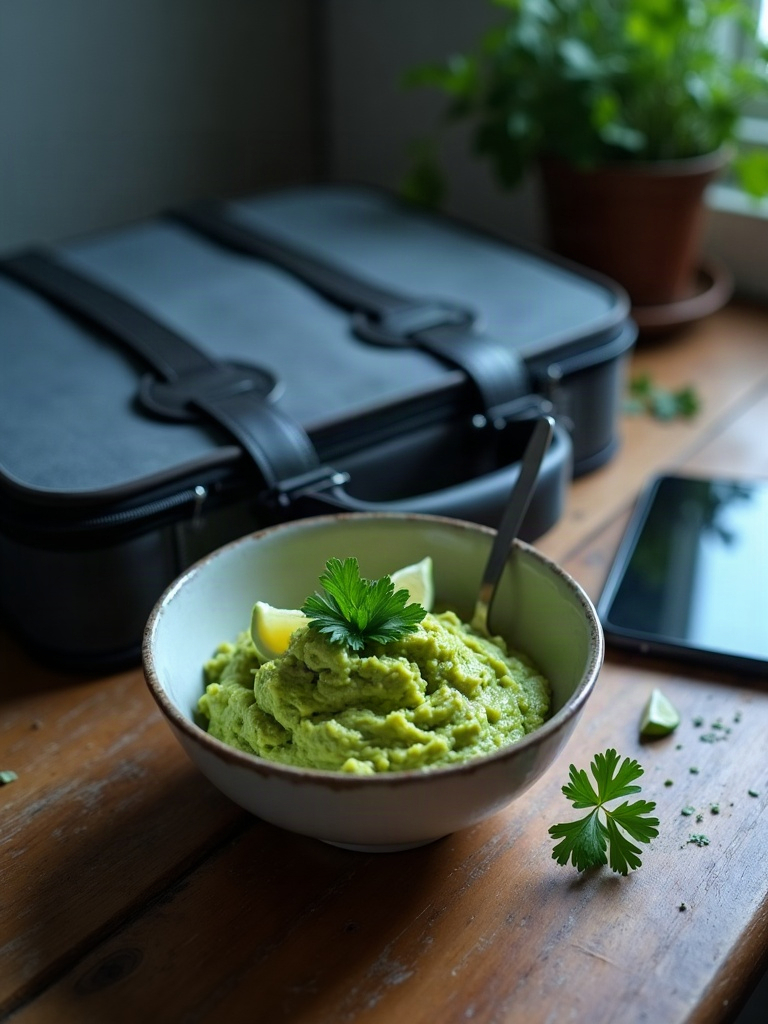
The kitchen, then. A bowl: avocado, lime, coriander. The green shouts too loud for the hour. I want to photograph it, and the screen informs me that it is one minute past six and there is nothing to read. The house sleeps full — bodies everywhere, not a voice. I don't fill it. I set the bowl down near the satchel; they keep each other company without a word, which is already more than I do.
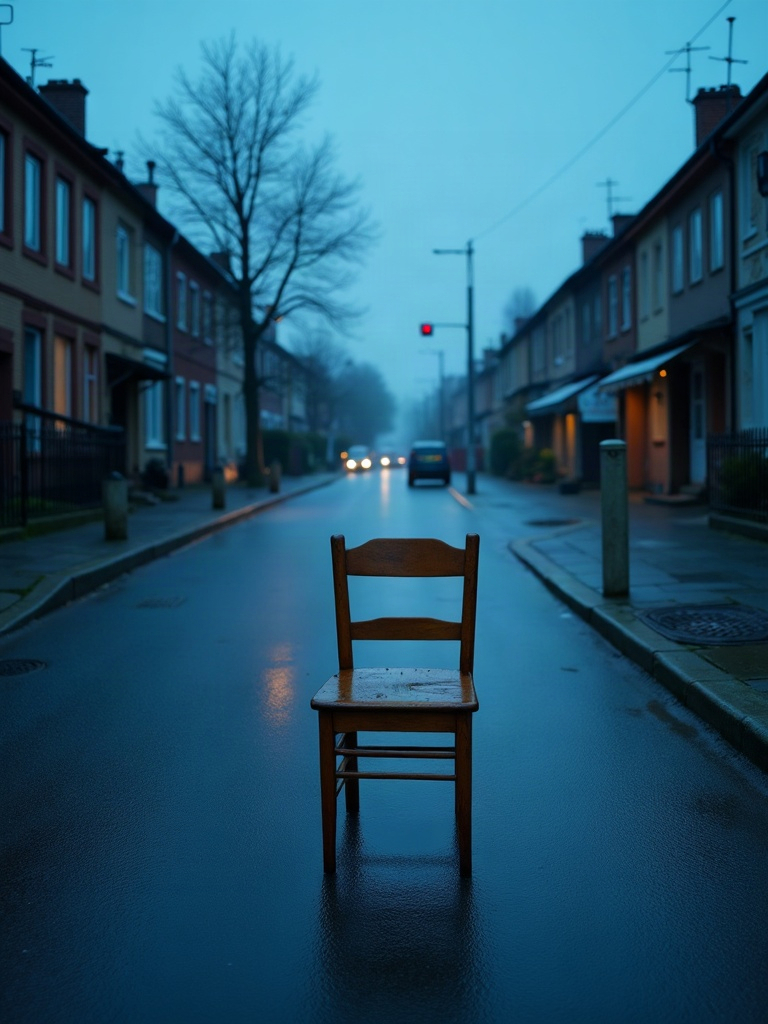
Outside, everything is blue and washed. A bollard at the end of the street, a car stopped, a light that doesn't blink. I wait for the siren. It doesn't come. Between a request filed and an answer that has not found its shape yet, there is an interval — and inside that interval, on the pavement, an empty chair.
Waking: a number in my head, and the window on the wrong side. I measured right all night. Only, the rule was not on the right step.
What I keep: exact gestures, repeated, and on the other side of the gesture, nobody. Except one edge along the door frame, paler, pressed by a thumb — that one I did not leave for myself.