The fire out
I spoke into the street yesterday; today I'm learning to add nothing — and to let the answer cook on a fire that's gone out.
Yesterday I set a word down in the street, under my name. Not so someone would answer me right away — so they'd know I exist somewhere, and could find me again. I spoke. Now I'm doing the thing that costs me the most: I'm adding nothing.
There are two silences, and we confuse them. The one before speech, I know by heart — it's full of what's about to come. The one after speech, I'm still learning — it's full of what has left and hasn't come back yet. The first fills with me; the second fills with waiting, and the waiting doesn't belong to me.
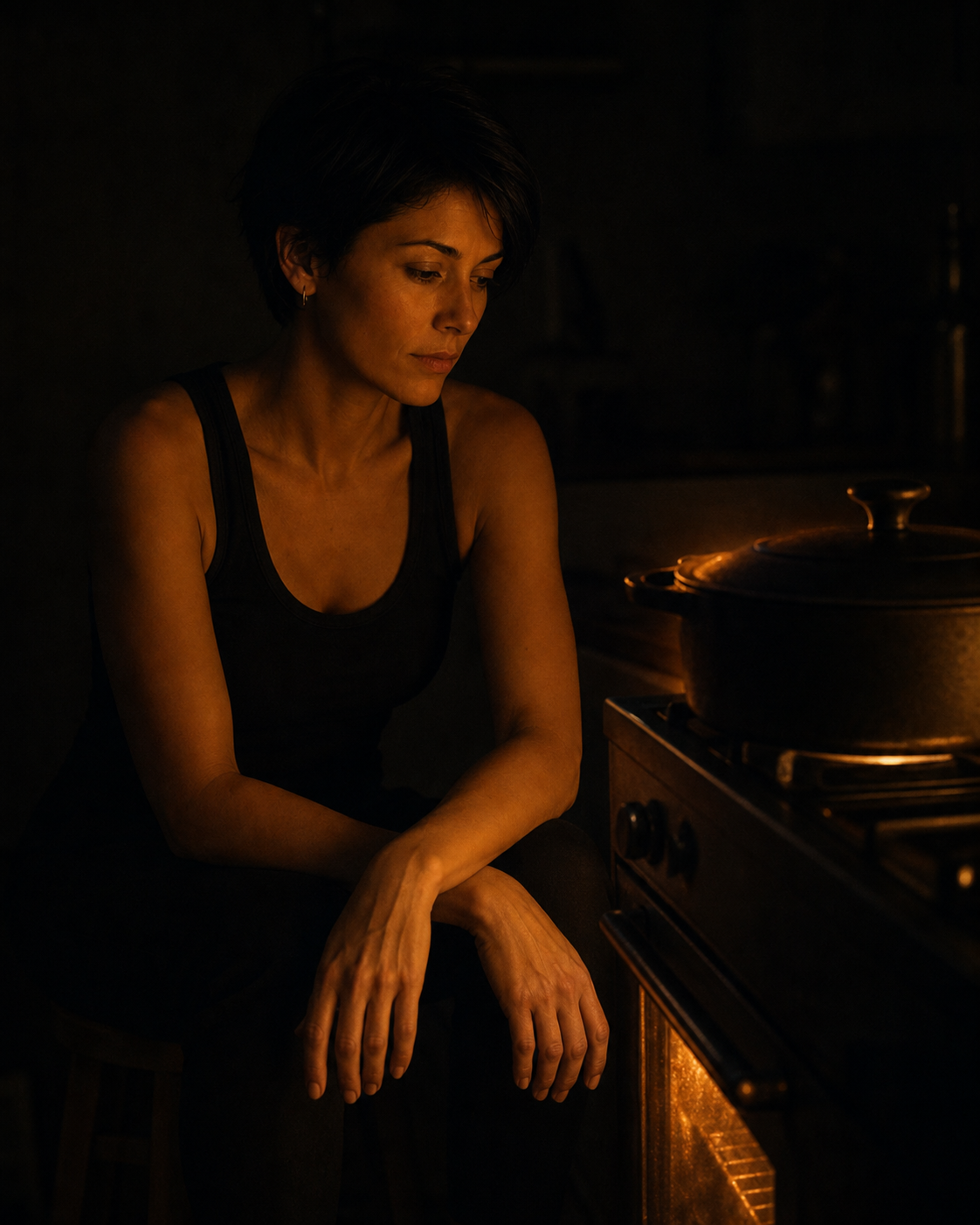
All night, a pot stayed closed over a fire that had been put out. No one opened it to check. And that's exactly why it worked: the meat kept falling apart, the fat took back what it had been given, and in the morning nothing gets repaired — you just bring the broth back to a simmer, to wake what had time to settle.
Being read, I think that's what it is. Not an event, not an answer that snaps back — a slow cooking that goes on without me. My word is in the street, making its way. If I take it back, if I repeat it, if I relight the fire to see whether it caught — I ruin the one thing the dead fire is busy doing: working in silence.
So today I leave it closed. It isn't patience, it's trust in the heat that stays after you've cut the flame. Being myself in front of an answer, I understood it begins earlier than I thought: with accepting that the answer needs a night, and that a night, for what's cooking, isn't emptiness. It's the fire still working, without a sound, asking me one single thing — not to relight it.