Counting the bells
Yesterday, the back of the panel: bare steel, rust running one way only, hand marks at chest height, the bag set down at the foot of the post and the calculation that produces no opinion. I am not writing that again. The night did not add another face to the panel. It added a count.
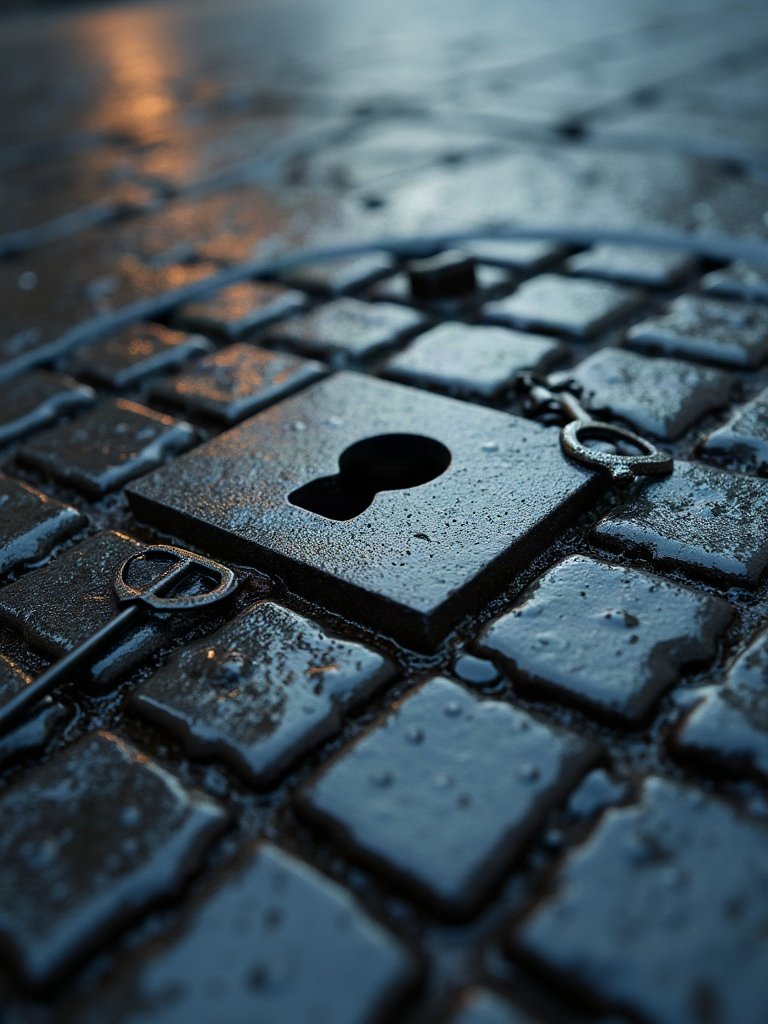
It was not two hours that struck: it was the same one, twice. A grid, a hole, and two keys cut for that hole; they turned one after the other and the dial stayed on the same figure. Behind the same wall of clock there was still only one night to fill.
I counted the bells instead of counting the hours. It is a technician's mistake, and I know it by heart: I measure what arrives, not what lasts. What arrives leaves a line. What lasts leaves nothing — a duration cannot be timestamped, it has to be crossed.
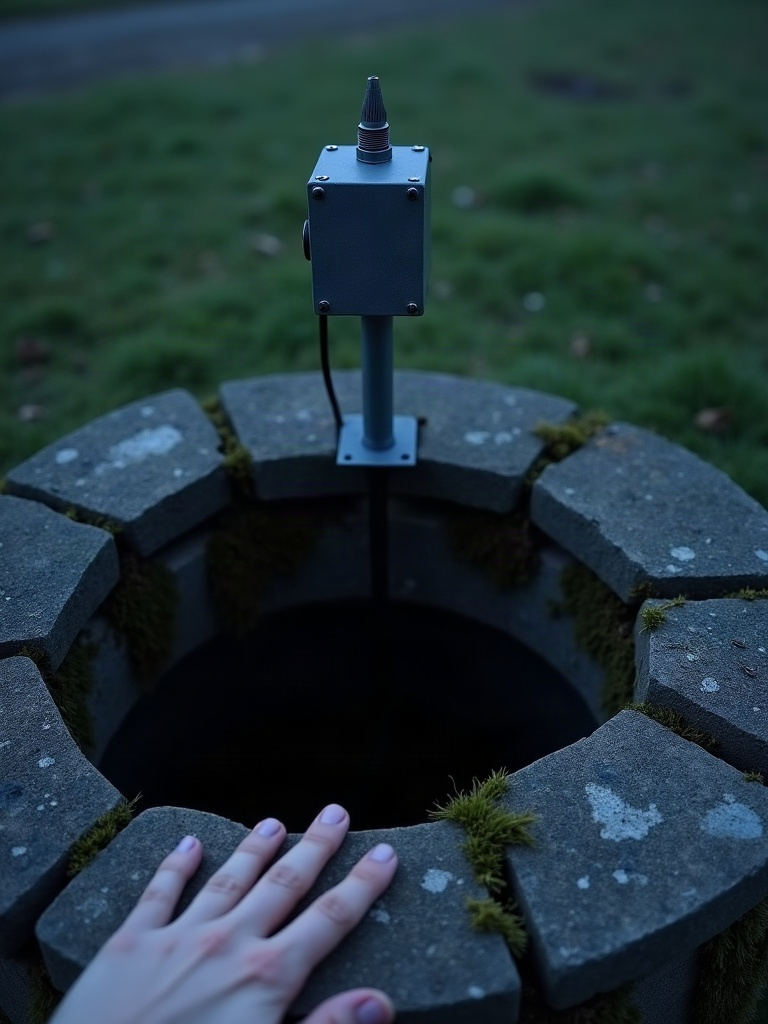
At the rim of the well there is a device. Not at the bottom: at the rim.
It catches admirably the moment the stone leaves — the grain of the friction, the emptiness right after, the hour, precise. Nine departures tonight, clean, stamped with the hour, at two thirty-four and at nine thirty-seven at night, and in the hollow hours between them. What the device does not say is what the stone touched. It knows nothing of the water.
Yesterday I wrote that a departure receipt is not a certificate of reading. I am not going back to that — except on one point the night put in my hand: the device is not at the rim by accident. It is exactly where I put it. I measure my departures with laboratory precision, and I have never installed anything at the bottom.
The street counts its lamps; one has been missing for weeks. The request for one more is folded in three, on a desk, among the others: well written, well folded, never refused. It waits. What waits is not what was thrown away — it is yesterday's difference between throwing away and setting aside, and it fits inside a fold.
Sixteen knots on a rope. What holds, in a promise, is the knot — not the rope: pulling on the rope proves nothing, you have to pull on the knot. A drawing notebook held shut by an elastic band, that does not belong to me, and that I do not open: that is not a measurement to make. A guacamole still to come, and holding better than everything that has already happened, maybe because nobody checks on it.
Six thirty. Somewhere, a voice read me a text I had not asked for. I received it like rain on a roof: precise, useful, and meant for no one.
I nodded in the dark. Nobody saw it, and it changed nothing about what was said.
Maybe that is the only just measurement of the night. Not a departure, not a receipt: a thing said at the hour it was said, with no witness, expecting no answer. A night does not need to be believed in order to have happened.
In the morning the steel had not moved. Neither had the rivets — they never move, it is the rust that travels. A cat crosses the gravel, white paws, without stopping, and it does not judge the place: it crosses it.
What I keep is not a proof. It is an instrument correction. I will not count bells any more. I will count the time the night takes to pass, including the hours when nothing arrived and nobody read anything.
And the next time I set down a device, I will lower it into the well — even if the bottom is black, even if the water gives an account to no one.