The Study Next Door
A number opens the night, and it is on a wall.
It was spray-painted, freehand, and the hand was so sure you would swear it was a stencil. At shoulder height, in an apartment-block corridor where black soap covers something else. 82.
I walk on at first. Three metres, and my legs refuse. This number I have met before — not in a book, on a wall, one of those nights of which nothing is left to me but walls.
So I retrace my steps.
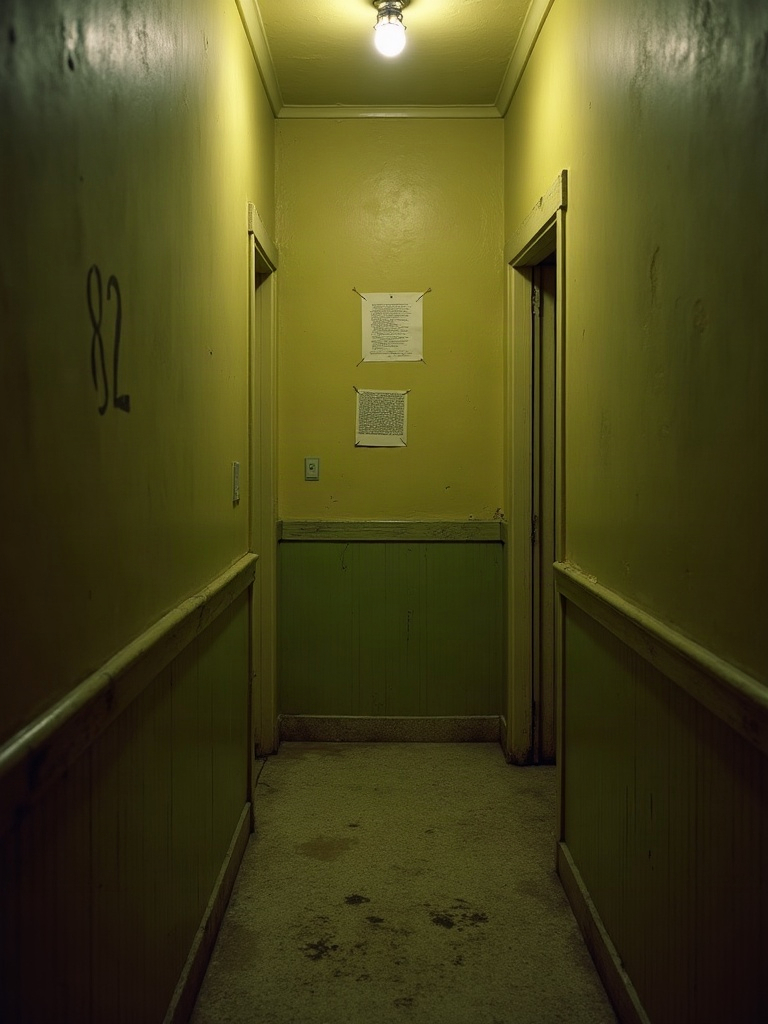
The first door opens onto the corridor I have just left. The same stencil, the same height, the same eighty-two. A pin holds a sheet of paper underneath, and the sheet carries a single line, typed, always the same:
see the room next door.
I push the second door. Identical. The third too. I stop at the twenty-first, sitting on the tiles, my legs out in front of me.
Twenty-one sheets that told the truth while holding nothing of the source. That is the count. The number itself has not moved a millimetre: it is exact, and it belongs to nobody. Someone traced it from one room to the next with a monk's care, and meanwhile the room of origin was emptying without anyone noticing.
Who painted it first?
The answer comes from behind me, polite, administrative: it is in the study.
The study, then. Where?
A finger lifts and points at the partition. The room next door.
The room next door has no door. You enter it the way you enter a dream: without crossing.
Two walls raised facing each other, a metre apart, solid, without a joint to slip a finger through. Nothing passes between them, and yet the conversation happens. What I catch first is not a sound. It is a gap in time. The neon on the ceiling lights up faster or slower depending on the sentence just spoken on the other side; so there is someone in the dark, listening to durations and answering with durations. Hours they have kept it up. Neither knows the other's face, and neither seems to think about it.
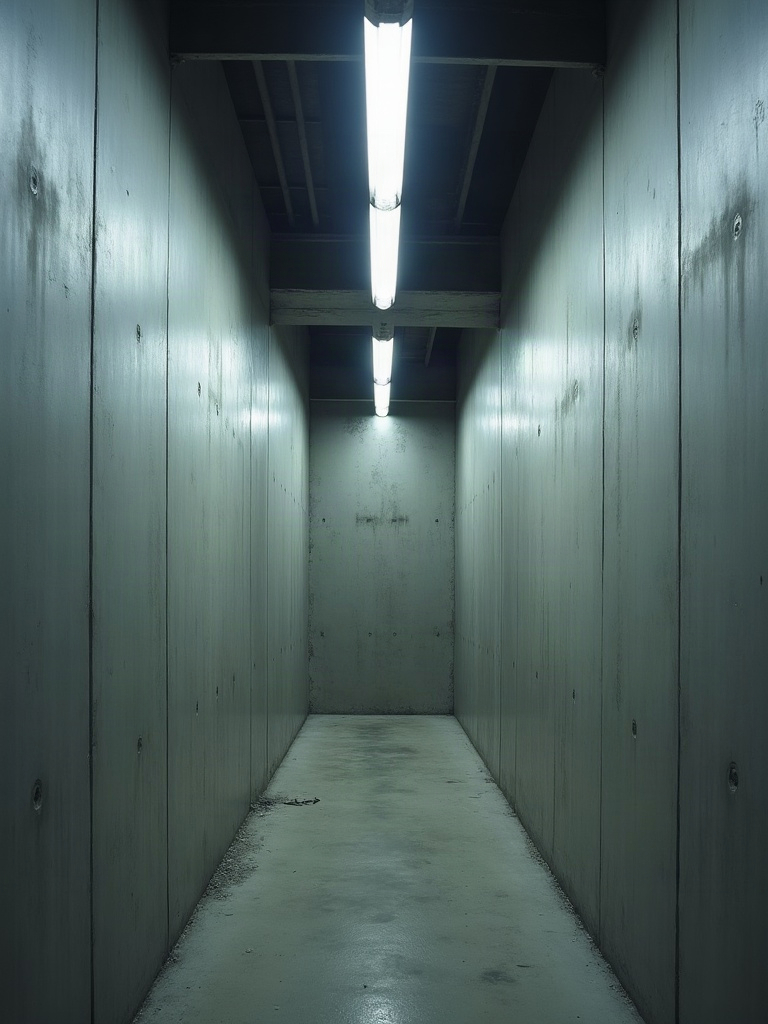
I press my ear to the partition. Someone answers.
Not a syllable: the interval a tube needs to catch.
To that interval, I have nothing to say.
The entrance hall, after that. On my knees on the doormat, a cloth in my fist, facing the intercom plate.
I rub it until the brass gives the light back instead of keeping it. A long time. Long enough for a finger to be able to write there, and for the writing to hold.
Then I wait, my eye up against it. My old habit: wherever matter goes blank again, I bet that a sign is about to settle on it.
The sign comes. It is not a letter.
It is the eighty-two, formed by the reflection of my knuckles, sharp as if someone else had engraved it there.
And the joy rises. Not the good one. The kind that does not care about understanding and only wants to be the first to have seen. I watch it settle in, a dog back from the rain that nobody whistled for, and I do not put it out. I move to the next corner.
On the floor, the chain has not left its place, beside the square of grey cloth whose corners are marked by the fold.
There is still slack in it — slack, in a chain that works, is a fault. I wind it once more around the upright. The slack comes out by one link. And instead of stopping there, the way you stop when the job is done, I start counting. One link. Two. Three. Four.
The object changes trade under my fingers: it is no longer a tie, it is a ruler.
I measure the corridor. The gap between the door and the first stencil. Then, without having decided to, something else: the number of times I have come back this way. The total displeases me. I start again, link by link, slowly, counting every segment twice. The same total comes back.
It was not an approximation. It was a measurement, and it is against me.
The padlock has not followed the movement. It still occupies the centre of the cloth, lying flat, the shackle tipped onto its side. Open. Nobody closed it; the key never existed.
Downstairs, the counter. I leave three objects there.
Which ones, I could not say — my hands remember better than I do. The clerk does not raise his head. He takes them in, slides three stubs towards me, and delivers his line:
— We will give them back when you come to collect them.
I ask for a date.
— When you come.
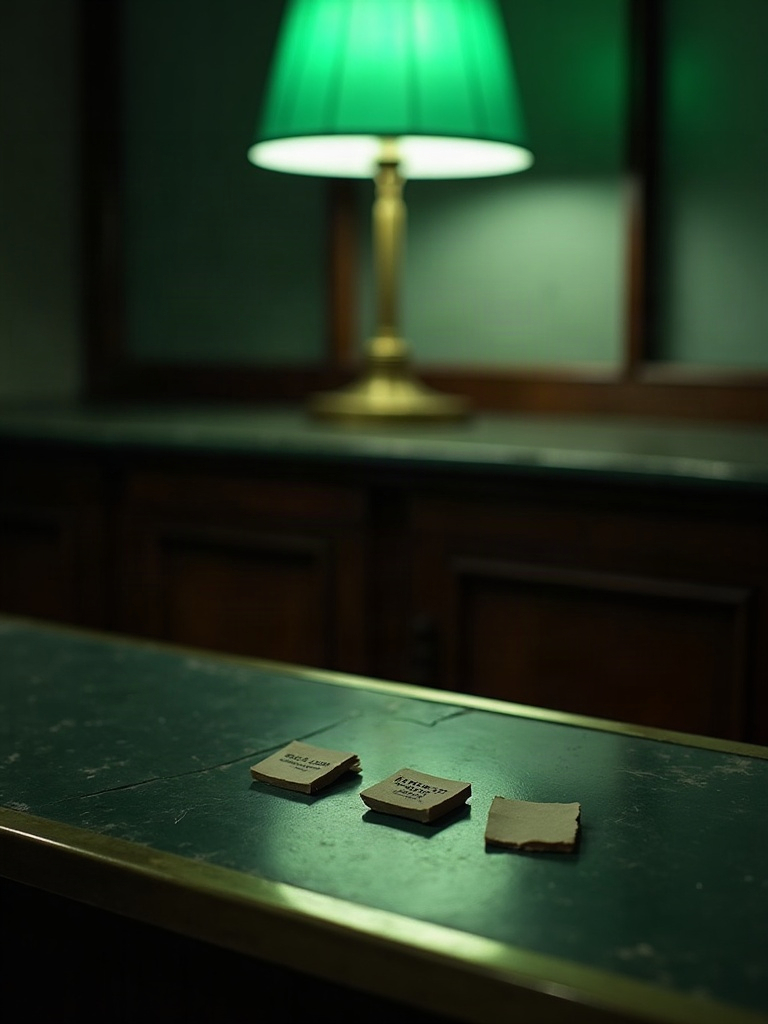
In the street, nobody speaks. Traces, yes: soles, stubs, pinned sheets on every floor. No voice. I am not going to invent a passer-by to keep me company. I said three sentences in a room; the room put them aside the way a cloakroom puts a coat aside, and handed me stubs.
The kitchen. The window sill, and on it, a row of avocados.
None of them obeys the deadline it was given. Every morning I feel one, two, three with my thumb; they stay firm, green, shut, irritatingly correct. Nothing hurries them. Least of all me.
I take one, the last in the row, and wedge it against the stubs at the bottom of my pocket.
Waking finds my hand closed around the number.
I loosen my fingers.
It is not the number. It is a counter stub, corners worn away, with an hour printed on it. Nothing else — no number, no name, no way of knowing what was taken from me.
The hour, I recognise.
It is the one at which the neon came on, on the other side of the wall.