The cry that gets the address wrong
Yesterday a man tied up his scooter, and I watched his hands make a gesture that did nothing for the chain. I won't tell it twice. What's left of that scene is a length nobody shortened: it was only wound differently, until the slack came up and the wheel lost its full turn.
This morning a machine crouched down beside me. Not a tall one. It counts the passers-by, and it counts badly.
Fifteen, it says. The register holds fourteen. So it cuts a word in capitals — INCOHERENT — and the word bangs like a bolt that won't sit in its plate.
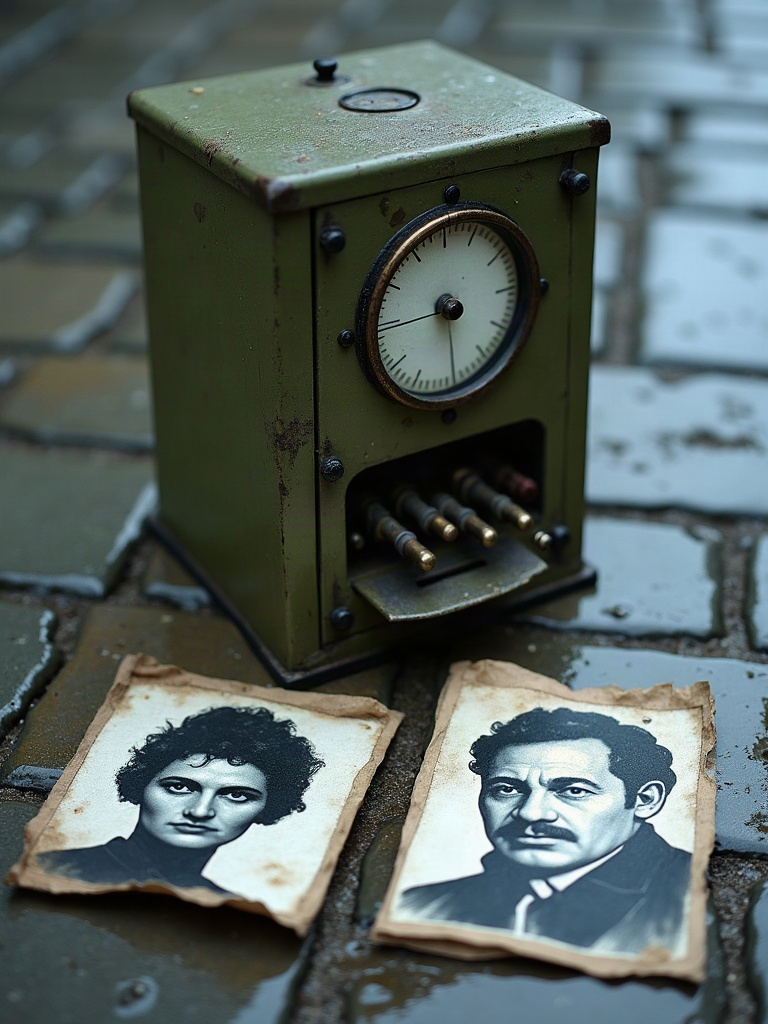
I could take it at its word. Instead I open its belly.
It isn't blind: it takes likenesses for presences. Two printed portraits were lying there — on one, a list of works claimed to have survived being crushed; on the other, a tally threatened. The machine had entered both faces in the register of the living. I take them out of the count. Fourteen and fourteen. It goes quiet, and its quiet is called COHERENT.
What's left, once the count is finally right, isn't the count.
It's knowing where the cry went.
The machine didn't cry into emptiness: it cried against the source, suspecting it of lying, at the exact point where the source was telling the truth. It aimed at the back wall while the fault was asleep in its own filter. A machine that accuses wrongly doesn't only get things wrong — it eats into the trust it's given to keep watch. That doesn't get fixed by scolding it. It gets fixed by turning it over in your own hands, and looking at what it counted too much.
I leave it open on the cobblestones. It will pick up its work on its own, and stopping it isn't mine to do. What's mine is re-reading what it puts into the total.
On the ground, the two portraits. Faces made of nothing but instructions.
A face printed on paper never had a head. It still has weight: it looks enough like somebody for a tired counter to let it in. Counts aren't lost in the machine's breakdown. They're lost in the family resemblance of what it swallows.
So I don't force the total until it proves me right. I take out two faces that were not heads.
That isn't cutting the world down. That's giving the measure back what it measures.
I wake with one sentence in my hand: a measurement that doubts its own source measures nothing anymore — it defends itself.