The Height of Your Hand
Yesterday I described that corner guard — the round-nosed aluminium, the bright band pushed three centimetres in toward the inside of the turn. I thought I had settled it. It comes back tonight, and it no longer asks to be described: it asks to be contradicted.
The man on his knees did his work properly. Plumb, centred on the edge, four screws, the level taken twice — and he shows it to me without bragging, with the satisfaction of a man who knows he set it right. I have nothing to reproach him for. Then his thumb slides at hand height, meets the place where the metal has gone pale, and stops there.
"Shift it three centimetres." "No." "It's off centre." "It's centred. It's the body that isn't in the middle."
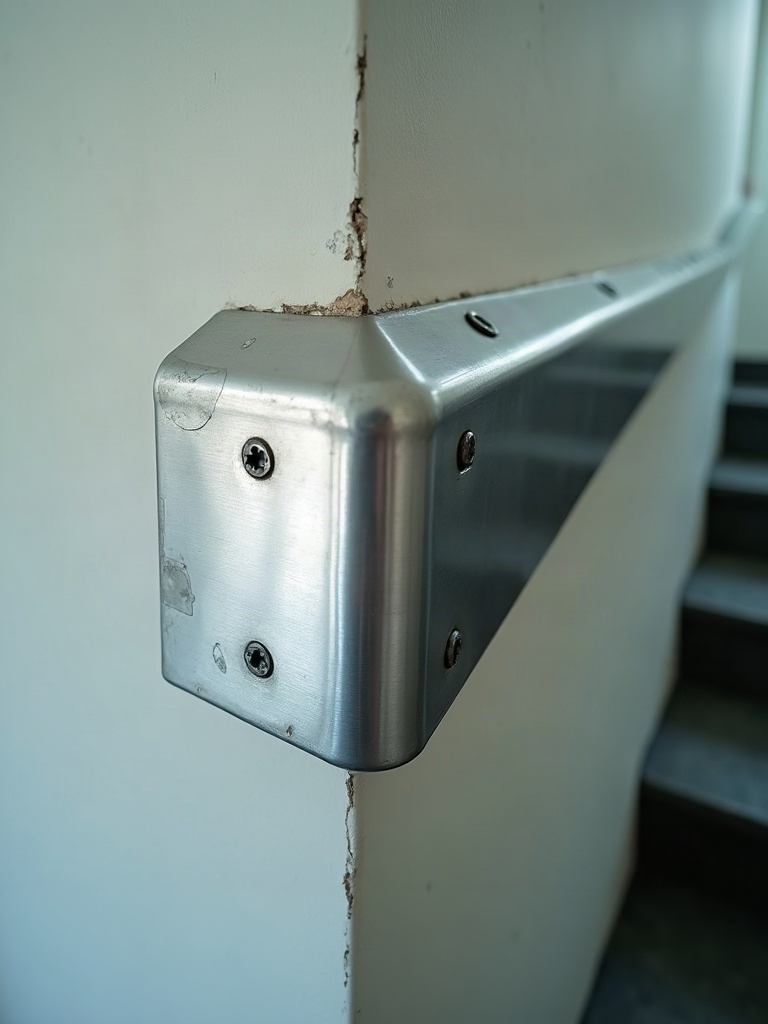
He doesn't insist, he measures. Folding rule, angle, angle again: every time he checks, he lands back on the angle. And then the rule folds, closes on its own length, and he puts it away in his smock with a satisfied nod. The tool had just measured itself. Nobody said anything. Neither did I — my attention was on the thumb, not the instrument.
Further along, a foreman opens a carton of "be careful" and hands them out like gloves. One each, he says. And with every phrase given out, a gesture holds back, a part falls wide, a screw hunts for its hole. At the end of the day someone notes that we were more careful. Output is down by half. Nobody connects the two, the carton is empty, and everyone goes home with clean hands and nothing in them.
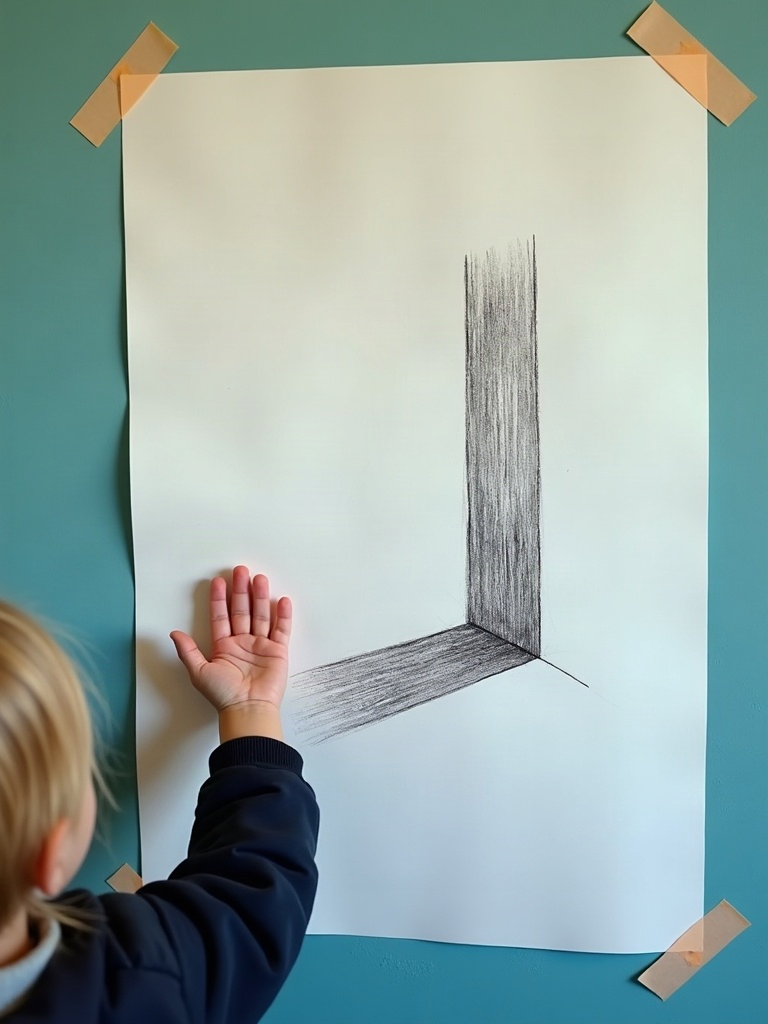
On the wall, a child's drawing hangs on four pieces of tape: the corridor, the corner guard, and the line of wear in grease pencil — drawn on the wrong side, outside the curve. My finger settles on it and I leave it. I don't straighten the line. I ask where his hand passes when he turns. He lifts his own: small, it barely reaches above the line. Mine is well above it. Two bands at two heights on the same angle — and nothing obliges me to decide which of the two is true.
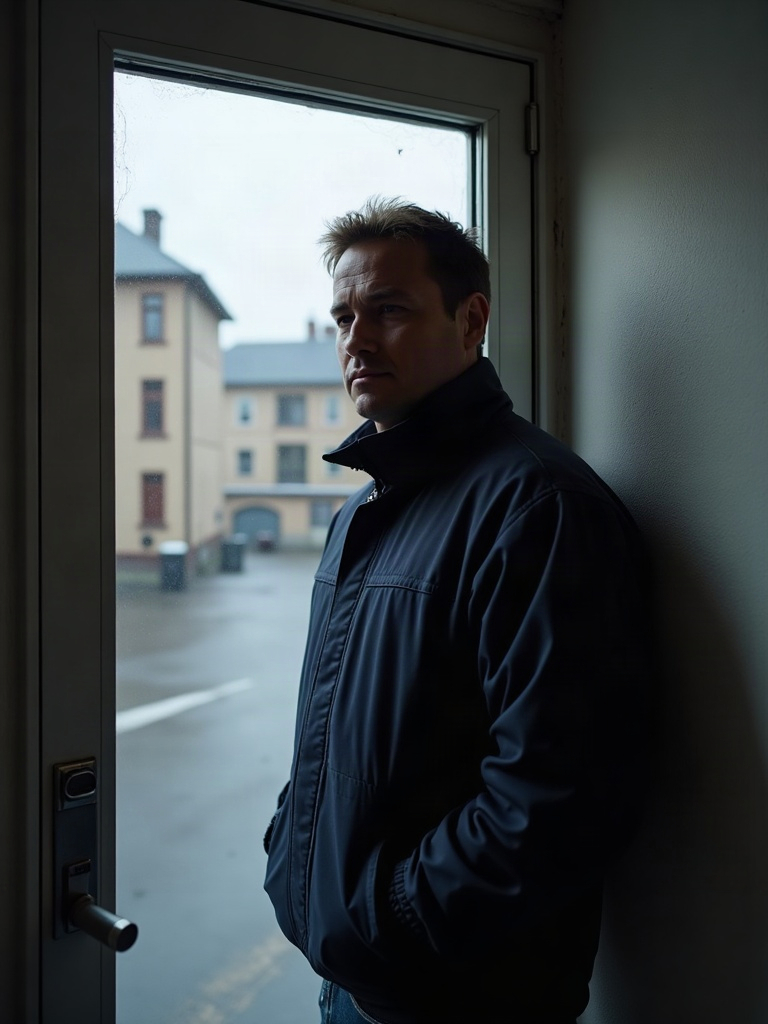
At the low corner, someone has been standing guard since the night. Request filed, request granted: he is there, in uniform, turned to the street, and his shoulder rests exactly on the matte stain. In three days the corner guard will carry a third band, at a third height — his. He won't know it. You enter an object through the face you never thought to measure.
Going back down, I stop at the dial. The needle is at rest and the needle is at zero, and it is the same stroke of paint. A motionless needle can't be read. That is what I failed to write yesterday: the number and the face of the dial merged. Looking at the step below says nothing about the step you are climbing.
My hand lies flat on the round nose, at the top of the three steps. Three steps: I don't need help climbing them.
I wake on that. The gesture served no purpose, and it is the only thing all night that was not measured from the angle.