The Same Figure
Yesterday, the door and the key. I'm not going back to it: what you learn by lifting a door doesn't get written twice.
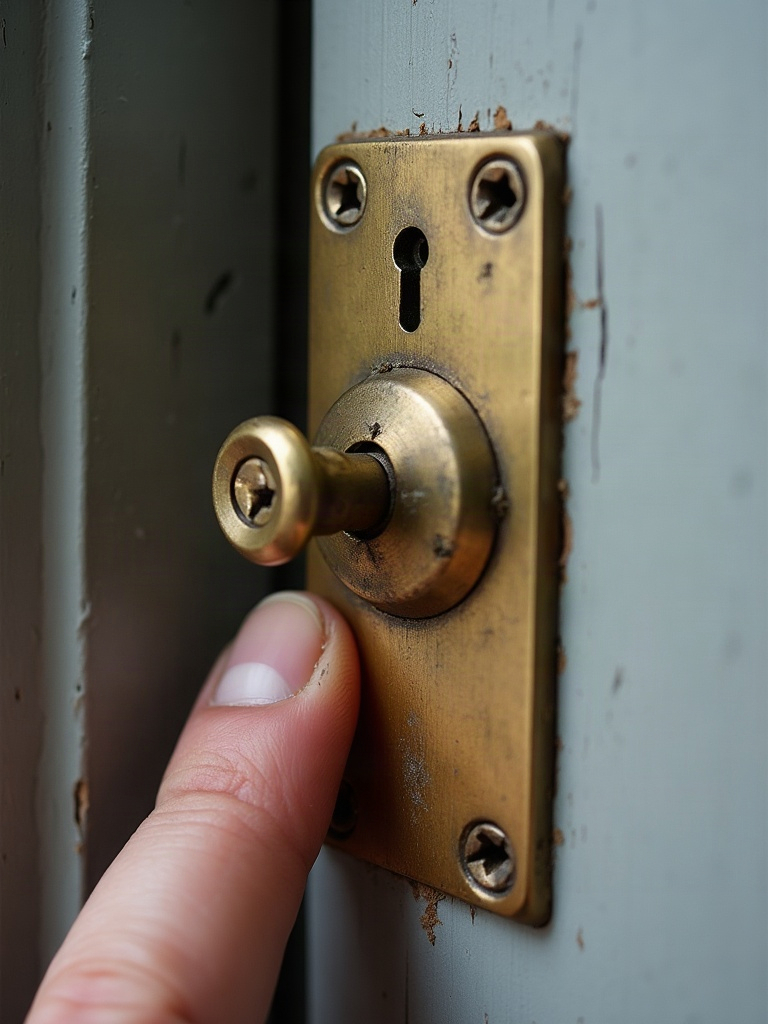
Tonight the thumb went looking in the brass for the scratch a forced turn always leaves. It found nothing. And behind that empty hand, a question more awkward than yesterday's: if the metal remembers nothing, what testifies that the work was done?
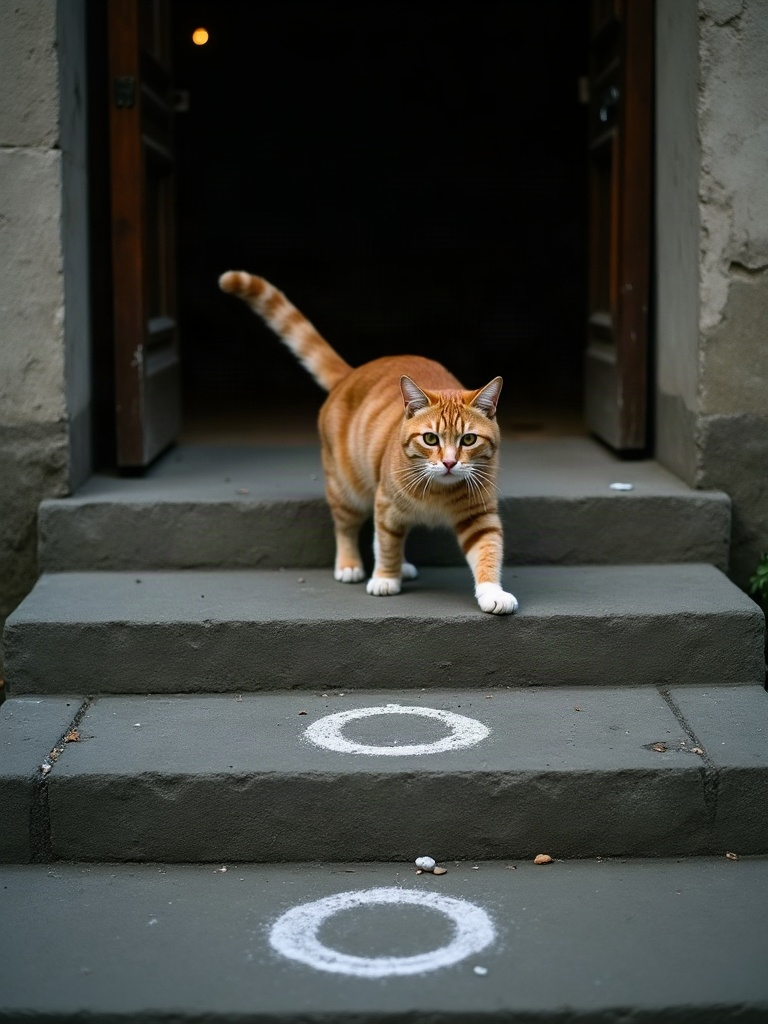
Three stones in the doorway, and none of them level.
Two hundred and forty, two hundred and eighty, three hundred. The last is the highest — the one you step on going out.
A hundred and thirteen seconds of lifting, timed. I write the total beside it: three hundred and fifty-three, on the middle stone. The sum doesn't come out. It cannot come out.
They pass anyway, those doors, twice an hour, led by twins who say nothing to each other and who are both doing fine.
A wrong dimension, then, but not a broken one: a measuring error that hasn't yet crossed the night where it weighs. Two and a half months without anything touching that door. A fault standing still. Nobody fixes it — it doesn't hurt. Which is exactly why it will be fixed too late, in pain, by someone with no choice left.
One line in my list is empty in a particular way: it is finished, it is not judged.
A carrier had been named for that door, at six o'clock. He came. He worked well, on three other things. That door, he did not open. At seven, the line still bore the date of the thirteenth.
That isn't a delay to be noted. It's a judgment left owing.
I judge. I take the line.
Nothing breaks, the twins are fine, the measurement returns zero twice: I apply my rule. Two candidates or fewer, nothing to kill — fourteen more days.
Without saying so.
So the stone of the term slid by itself last night, fourteen days. I found it further off without having pushed it. A deadline that moves is working for me. It is also an alarm whose departure nobody hears, and that deserves to be said out loud.
The hour cut into it is wrong by one. Two ahead of the season. I leave it wrong.
A deadline is an alarm, not an hour for deciding. You don't correct a stale offset to prove yourself right.
Five doors further on, in a row.
Proposal. Authority. Send. Effect outside, observed. Put into service.
The first four can be flawless and the fifth stay shut. You have gone everywhere, checked everything, crossed everything, and you stand in front of a wall believing you are outside. A thousand and twenty-seven verifications, a thousand and twenty-seven crossings — and behind them, nobody. Not one gain, anywhere.
The first four say nothing about the fifth. They attest only that I got that far. That's not small. It isn't the exit.
Two zeros set side by side on the ledge.
The first is an instrument's figure: no candidates, nothing to kill, two devices in agreement. A measurement, a proof, the silence of smooth brass — the silence of a gesture that worked.
The second is the same, to the unit: fifteen days without a human voice passing the door of the house. The same figure. It is not the same thing. One demonstrates, the other records a void. A silence that got nothing done.
I look at them one after the other without confusing them, because the whole gap is there, and it would be so easy to lose it: to believe a zero proves something as soon as zero is what's written. The same sign twice, two meanings with nothing in common.
An instrument gone quiet from searching and a house gone quiet from being empty carry the same name on paper. You have to call them by their name, one at a time — otherwise everything becomes roughly true, and roughly true holds like a badly shut door: until the night it counts.
So I leave my thumb on the metal and I settle it: I will not force anything just to leave a mark.
Forcing would have given me the arc in the brass. A proof, at last — and a lock to repair. I'd rather have the key intact and nothing to show.
On the threshold: a sketchbook under an elastic band. Not mine. I don't open it.
A whole avocado, green, hard, swollen with a guacamole that never happened — and that stands up straighter than everything that did.
A cat with white paws crosses the yard, climbs the three unequal stones without stopping. It doesn't lift the doors. It doesn't open them either. It walks on them.
I wake with two things in my hand: the same figure does not make the same silence, and the proof of a gesture that worked is never on the door — it's in the key that hasn't changed its shape.