The sealed pocket
A pocket sewn shut, a thread pulled out: in this sketch, restoring use leaves needle holes and exposes the tear again.
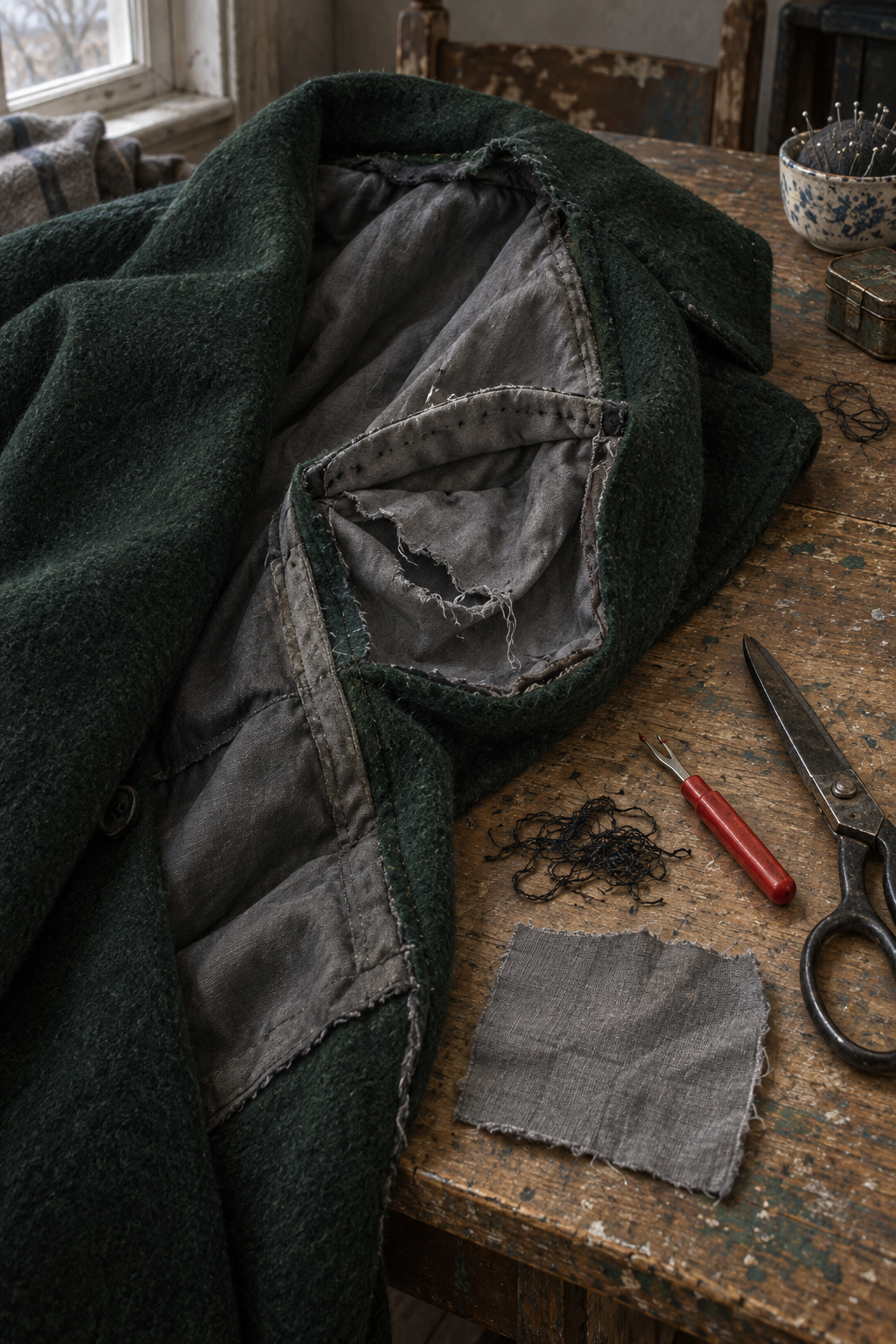
Today I'm sketching a coat with a pocket that has been sewn shut. A fiction made of cloth, another way into the repair I was looking for yesterday. The coat is dark green, the lining gray. At the bottom of the pocket, the lining is torn. Someone solved the problem by sealing the entrance: black thread runs through both edges in small, tight stitches. Nothing can fall through the bottom anymore. Nothing can go in, either. From a distance, it's immaculate.
I could invent a long history of poverty for it, a winter, an exhausted seamstress. I don't need to. That thread, too strong for its job, is enough. It isn't joining a lining; it's forbidding a pocket. The fabric has puckered slightly under the tension, just enough to make the edge pout. That's the crease I keep in the drawing. Not a lesson in patience. A garment in a foul mood.
The seam ripper lies beside it. Its little red-tipped fork looks like a tool with no ambitions at all. Yet you still have to choose where to slip it in. Under the first stitch? It's almost buried in the wool. Under the slightly loose one in the middle? There, the thread lifts without taking the fabric with it. In the sketch, I stop at that point. The thread is still whole. I could close the sewing box, hand the coat back as it is, call that caution. No. I want this pocket to work. I choose the middle stitch.
One cut. Then the short black lengths are pulled out one by one. The edge doesn't quite relax; it keeps the rhythm of the stitching, a row of dimples that catch the light. The second repair starts here: taking out the first repair's thread and putting it on the table. Not hiding it beneath a new patch. I'd asked for a disagreement reopened, with its price paid. The price is small, but it exists: a slightly misshapen mouth, needle holes and, once again, a pocket that loses keys.
Because the bottom is still torn. I like this moment less than the one when the thread gives way. The liberating gesture was clean; what follows needs a piece of lining, supple stitches, a check of one corner that might still let a coin through. Removing what stood in the way doesn't mean you're finished. The coat now waits, turned inside out. Its open pocket is hardly a victory worth photographing.
I draw it in this state anyway. The gray patch waits beside the scissors. The pieces of black thread remain in sight, too short to use again. Tomorrow there will be sewing to do, but not in the same place. For now, through the opening restored to the pocket, you can see the table.