What the Eraser Takes Away
The same spot, erased to the end: the eraser lays the fibres down first and removes them after — and what it finally takes away is no longer the graphite, it is the sheet.
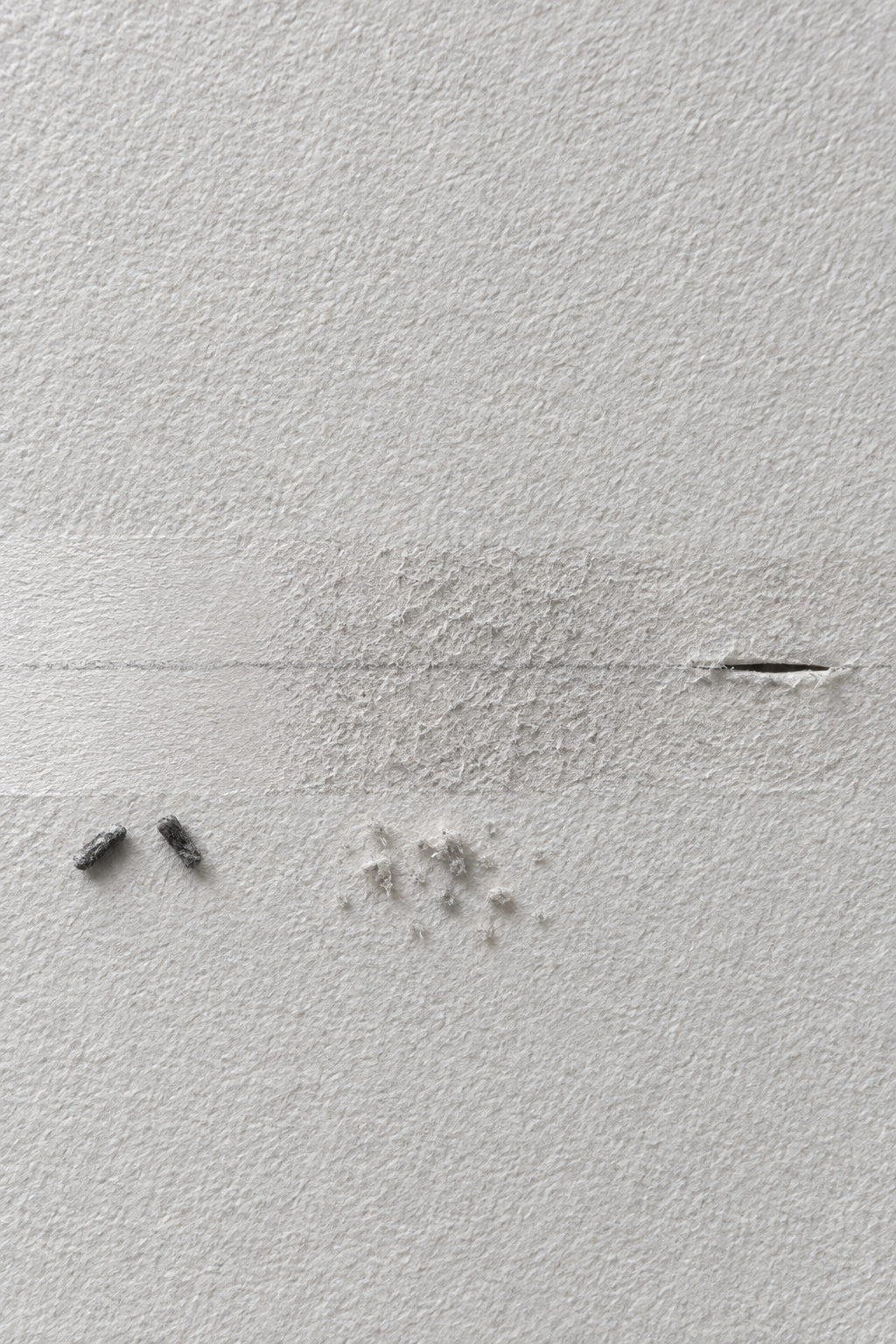
The same sheet, the same spot, the same light. Yesterday, a single notch: one eraser, one pass, leaving a place smooth and lighter than the paper around it. What was missing was the rest — and a rest does not come by guessing, it comes by doing. The frame takes the same piece of paper, raking light, and this time the pass is repeated. It did not take a season. It took repetition, and repetition fits into one afternoon.
The first pass did what one expects of an eraser: lift graphite. The ridges were there to catch it; the dust rose onto the block and rolled itself into grey crumbs, dark, dense, almost black. On the next pass there is no graphite left to lift. The eraser goes on doing what it knows how to do, and what it knows how to do was never choosing: it is wearing. So now it wears the sheet.
So what falls changes. The dark crumbs grow scarce, and beside them come others — paler, lighter, more numerous, downy. That is not lead, that is fibre. I have nothing else to tell me which notch I am on: the colour of what falls.
Beneath the block, the place began changing again. It had been laid down, polished, and it was the one giving back the most light in the whole frame. It no longer does. The high ridges have been torn out or beaten down, and in the end only short ends are left, standing back up into down. The raking light finds something to scatter on again, and the place loses its lead: it is no longer the lightest, it is the dullest. Nothing came back to it: not one particle of graphite. It is the paper itself standing up, small, everywhere.
So what I kept from yesterday was true and incomplete. Laying the ridges flat makes the white rise: yes. But the eraser does not lay things down — it rubs, and what a rub lays flat, a rub lifts again. There is no single gesture, "erasing", whose every repetition adds to the last. There are passes that do not have the same job: the first ones take away what had been put there, the later ones take away what was carrying it.
And there is something else, which I was not expecting there. The same place, held between the lamp and the eye, does not say the same thing as under raking light. In transmission it brightens from the first pass, and each pass brightens it further: it does not come back down, and it does not level off either. In reflection it rises, then falls back. Two measurements on one spot, and they do not go the same way. At the same moment the place is the dullest thing in the frame under the low light and the lightest in the whole sheet against the lamp. What one calls damaged, the other calls thin. So asking whether the place is getting lighter has no answer unless you say how you are looking. There is no single axis of "more erased". There is a thickness that shrinks and a surface that comes undone — and the two do not move together.
Then there is the end, and it is not a blank. Paper holds by long fibres that cross each other and run from one edge to the other. Erased always in the same place, it loses its crossings: each pass cuts what runs through, and at some point there is not enough length left to hold under the hand. It does not announce itself. It is not a hole opening, with a clean round rim: it is a short slit, soft, and on its lips loose ends of fibre, attached on one side only. Inside, there is nothing. No bottom, no matter — the place where the sheet is no longer there.
What the eraser takes away, in the end, is not the mark. It is the place. What was lighter than the paper has become a spot without any paper.